Industrie
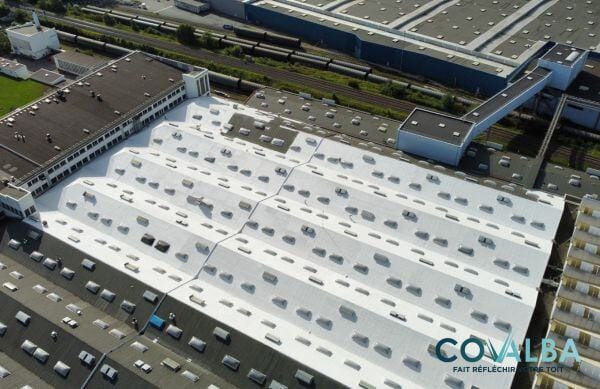
Usine d'embouteillage (confidentiel), France
Installation du revêtement réflectif CovaSeal 20 sur l'étanchéité bitumineuse.
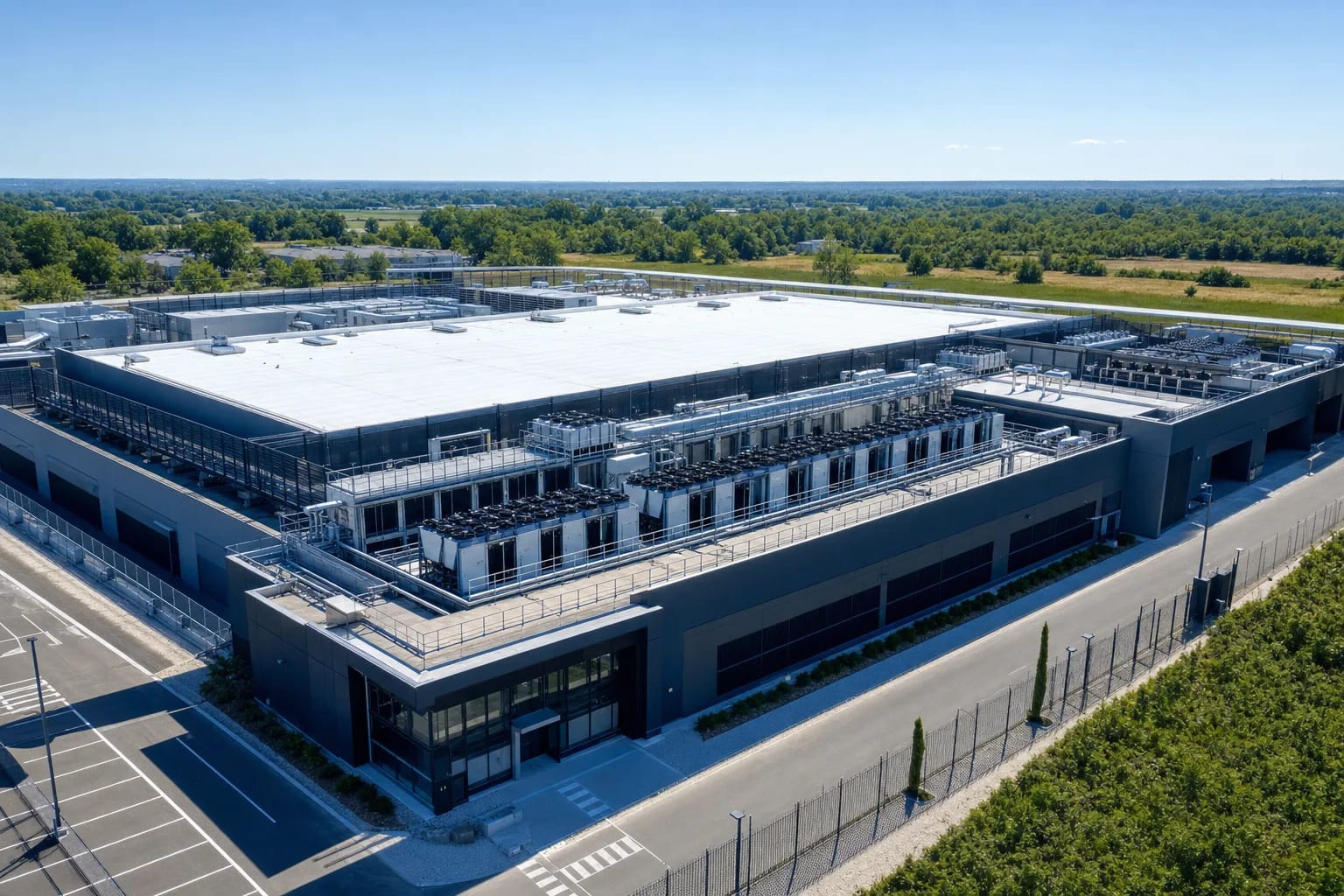
Cool roof for data centers
A cool roof cuts the heat your roof takes in. Your chillers run less and your operating margin goes up.
-7 to -8 °C
of roof thermal load
up to -40%
on roof-related cooling
0 downtime
during the works
Ils économisent déjà avec Covalba












Why act
Your racks already produce a lot of heat to remove. In summer, the roof adds a share you pay for in extra cooling.
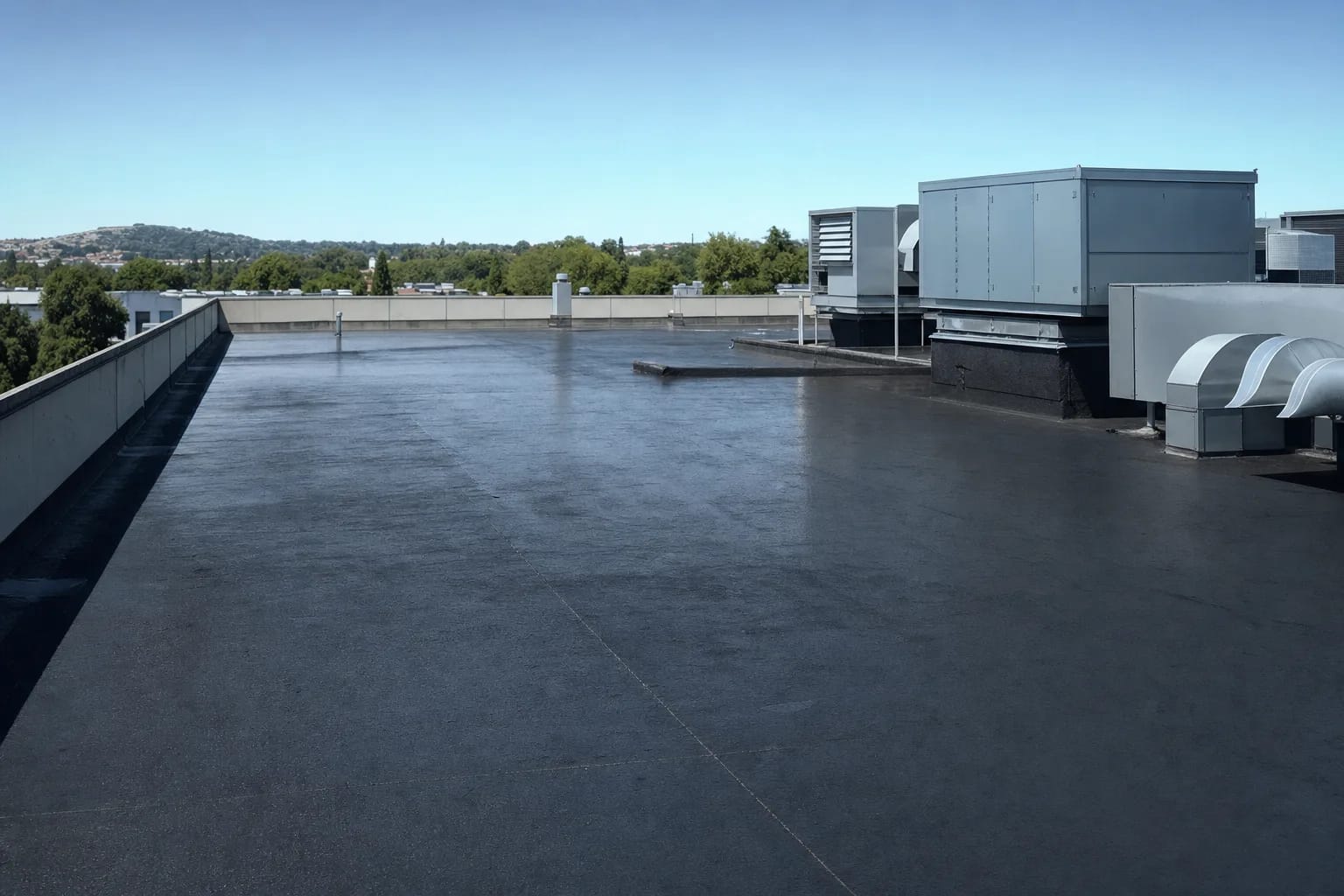
A dark roof absorbs the sun and sends that heat down into your halls, on top of the heat from the machines.
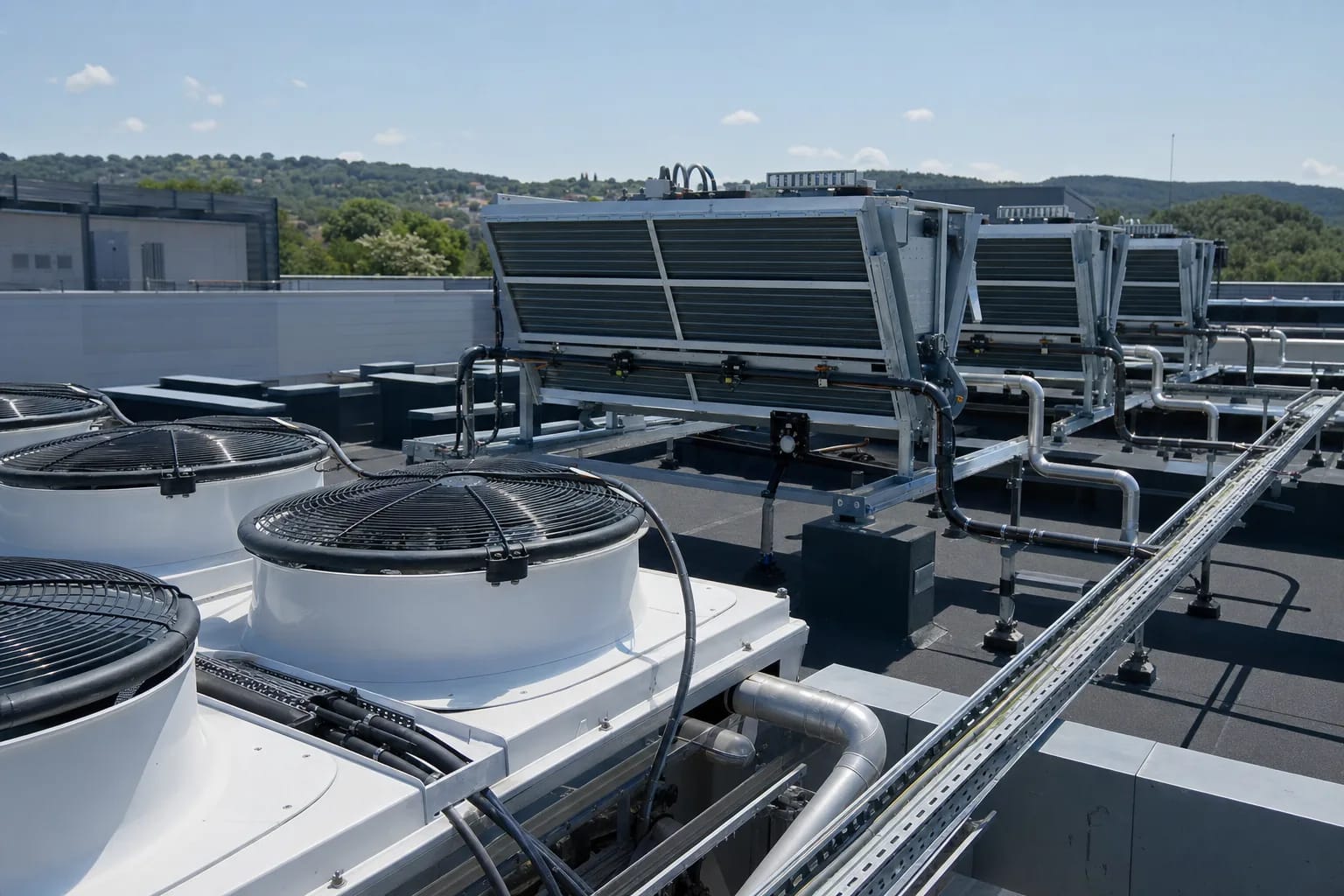
When the roof heats up, outside air is no longer enough. Your chillers take over, during the most expensive hours.

Your halls run non-stop. Works must not cut any service or change anything inside.
That heat is dealt with outside, on the roof.
The Covalba solution
The coating reflects up to 94% of solar radiation. The roof absorbs far less heat, and your cooling systems have less to remove.
Machines on the ground, hoses on the roof: your operations continue throughout the works.
Durability
Every return to the roof is an operation to organise on a site that never stops. The service life of the coating therefore counts as much as its price per m².
| Standard acrylic coating | Covalba polyurethane system | |
|---|---|---|
| Low installed price | Reflectivity that lasts, fewer returns to the roof | |
| Price per m² | ~€15 | €20 to €22 |
| Service life | 2 to 5 years | 8 to 10 years |
| Reflectivity drops quickly | Reflectivity retained over time | |
| Chalking and yellowing | Anti-UV finishing varnish | |
| More frequent reapplication | Membrane replacement pushed back 8 to 10 years |
Price per m²
Service life
-
-
-
Polyurethane systems with an anti-UV finishing varnish (CovaTherm) last 8 to 10 years, against 2 to 5 years for the acrylic coatings on the market.
What you gain
The roof stops adding its share of heat. Your cooling plant works less, from spring through autumn.
-8 to -10 °C
under the roof in summer
From the first summer
Up to -40% on the share of cooling linked to the roof, every summer.
A roof that heats up less lets outside air cool your halls later into the day.
The works stay on the roof. No downtime, no access to the halls, no dust.
The coating protects the membrane from UV and pushes replacement back 8 to 10 years.
Here are the buildings where this lever pays off most.
Your buildings
Data halls, power rooms, telecom halls, edge sites or control offices: heat comes in through the roof in every case.
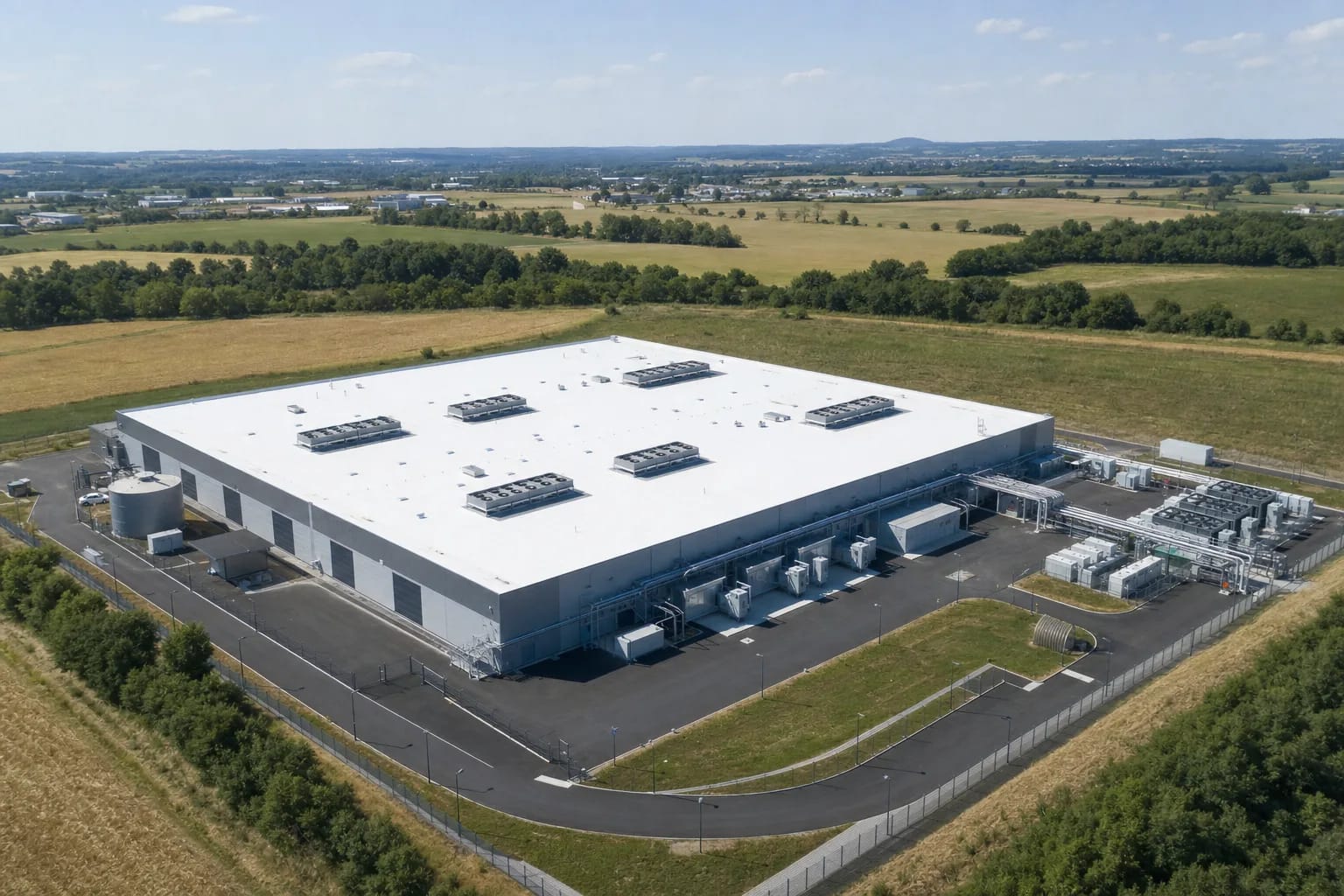
Cut the solar load above the racks to relieve cooling production.
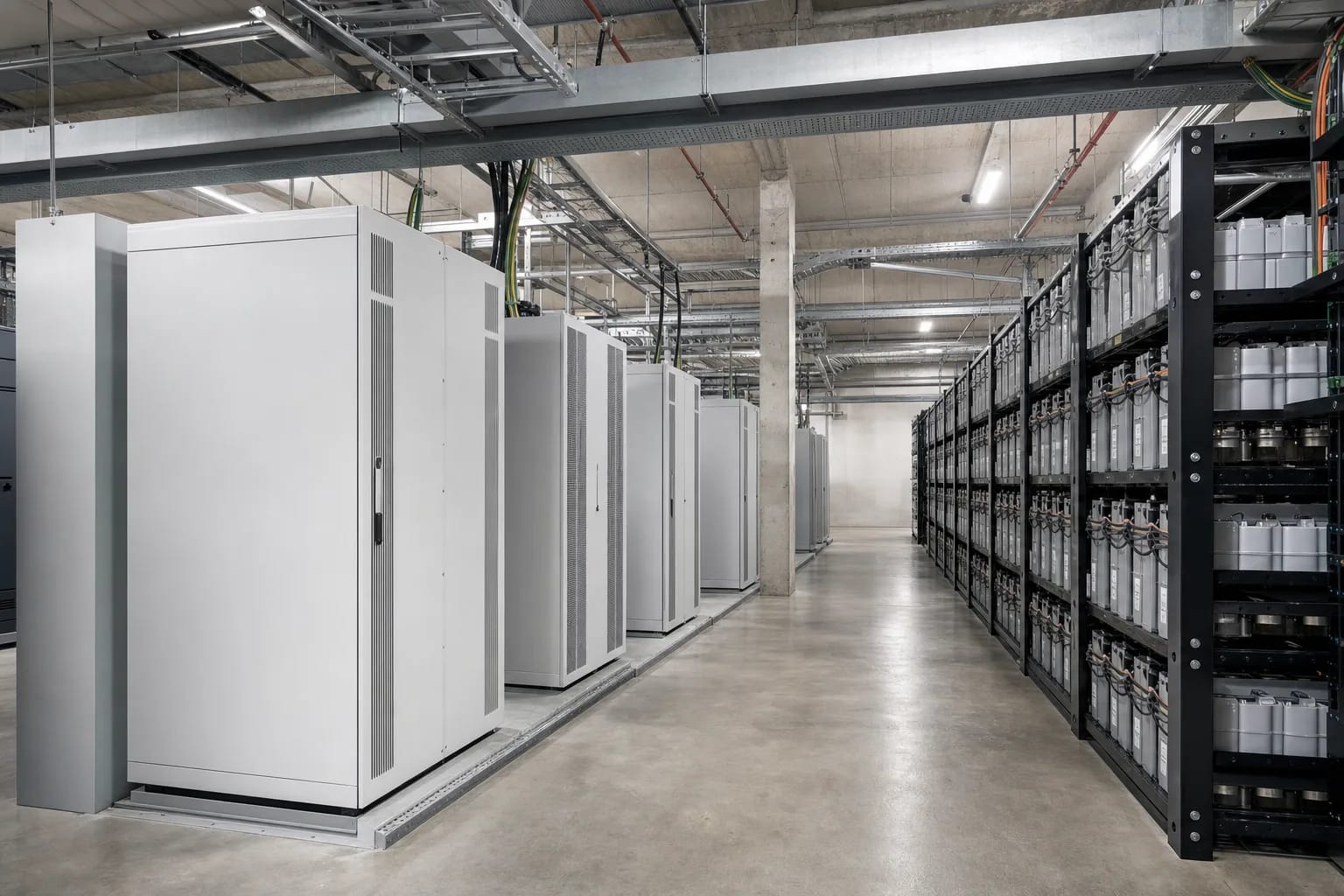
Limit heat build-up in a temperature-sensitive room, with no work inside.
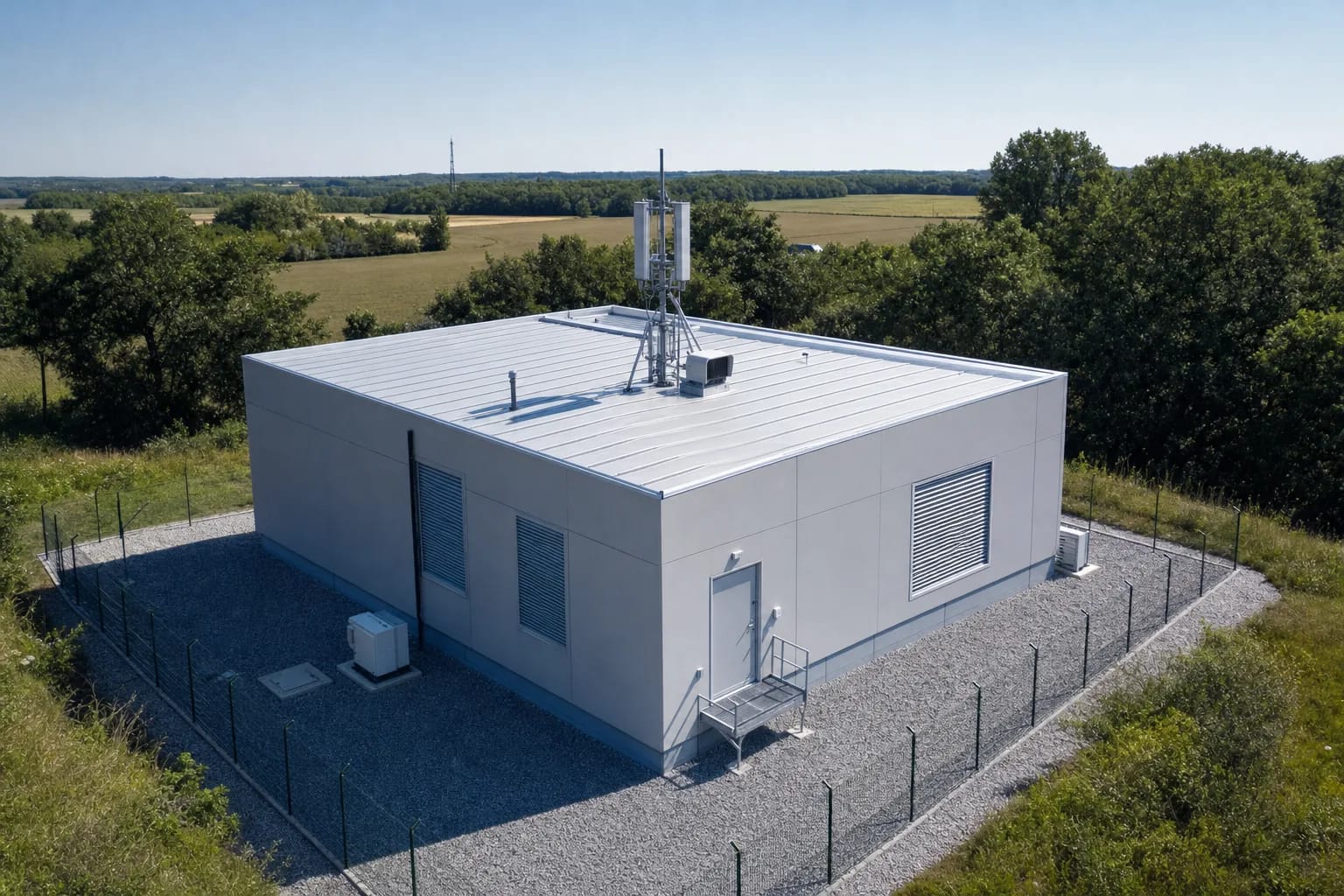
Treat the steel deck roofs of technical halls facing full south.
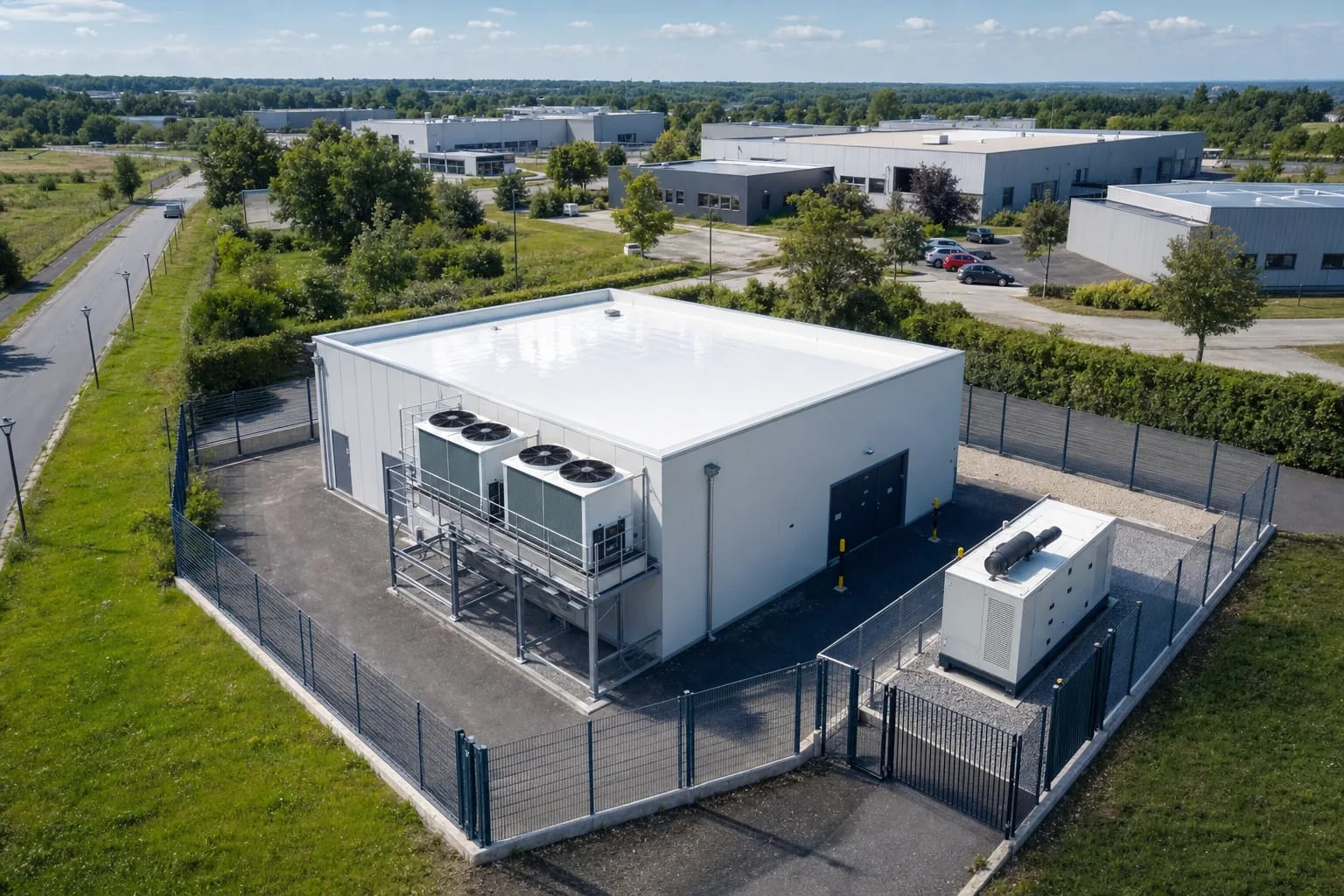
Compact buildings, highly exposed at roof level, where every degree avoided counts.
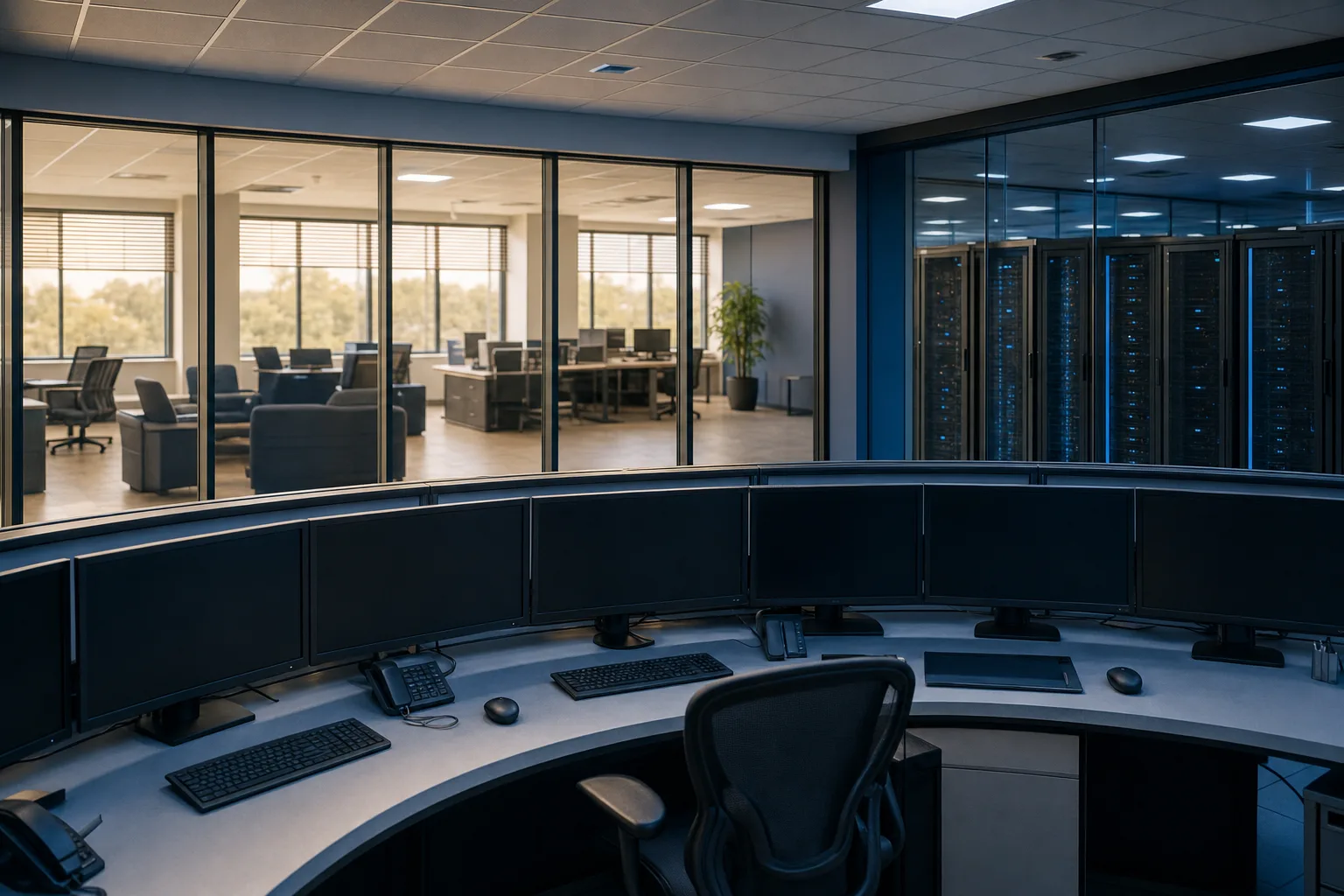
Improve summer comfort for the teams on call under the roof.
The remaining question is how to work without touching operations.
Controlled works
Everything happens outside. No operational shutdown, no change to your cooling plant.
Voir la vidéoSurvey of the substrate, the detail points and the rooftop equipment: chillers, heat exchangers, cable trays.
High-pressure cleaning and treatment of weak points, following your site access and safety procedures.
Continuous spraying of the system matched to the substrate. Machines on the ground, only the hoses go up.
Thickness and coverage checks, then handover of the site file for your maintenance plan.
A few days to a few weeks depending on the surface · No service interruption
Concrete results
These figures come from our projects and from temperature readings taken on the roofs we treat.
500+
projects completed in France, Switzerland and Belgium
8 to 10 years
service life of the polyurethane system
-8 to -10 °C
under the roof during summer
Installation du revêtement réflectif CovaSeal 20 sur l'étanchéité bitumineuse.
Installation de la peinture réflective CovaTherm 8 sur l'étanchéité bitumineuse.
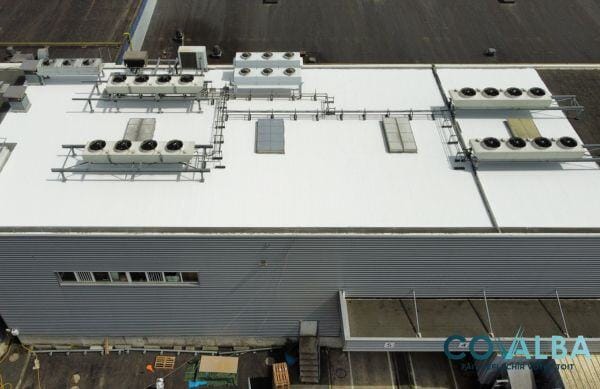
Installation du revêtement CovaSeal sur l'étanchéité bitumineuse.
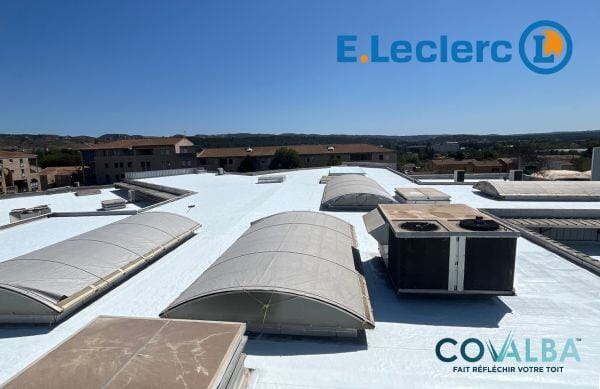
Installation du revêtement réflectif CovaSeal 20 sur l'étanchéité bitumineuse.
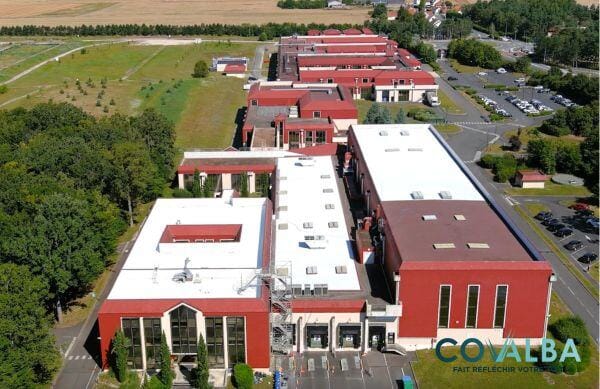
Installation de la peinture réflective CovaTherm SRI=119 sur l'étanchéité bitumineuse.
Voir le cas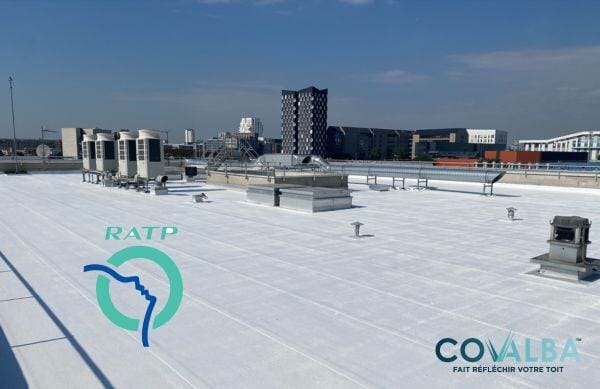
Installation de la peinture réflective CovaTherm SRI=119 sur l'étanchéité bitumineuse.
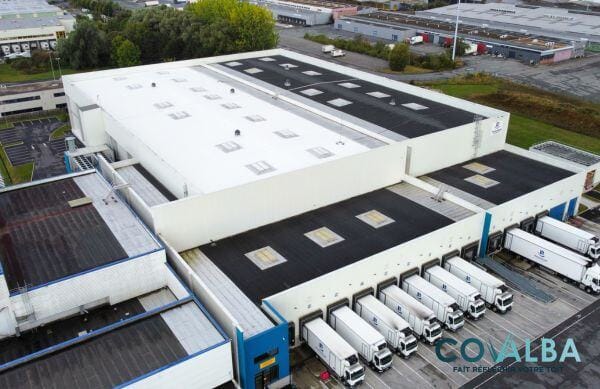
Installation de la peinture réflective CovaTherm SRI=119 sur l'étanchéité bitumineuse.
Installation de la peinture réflective CovaTherm SRI=119 sur l'étanchéité bitumineuse.
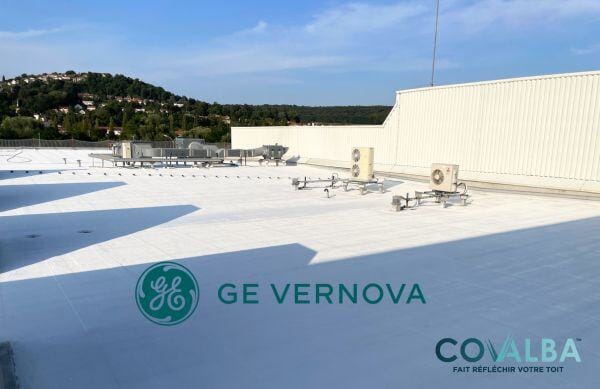
Installation du revêtement réflectif CovaSeal 20 sur l'étanchéité bitumineuse.
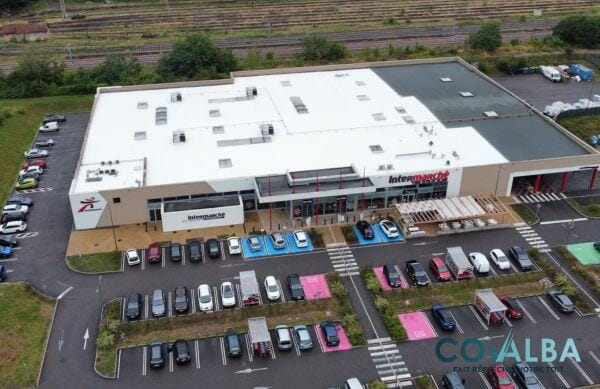
Installation de la peinture réflective CovaTherm SRI=119 sur l'étanchéité bitumineuse.
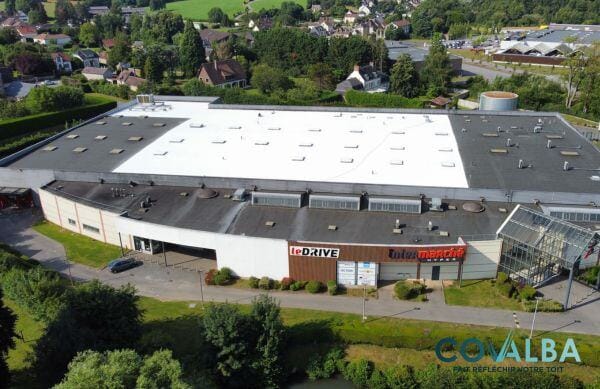
Installation de la peinture réflective CovaTherm SRI=119 sur l'étanchéité bitumineuse.
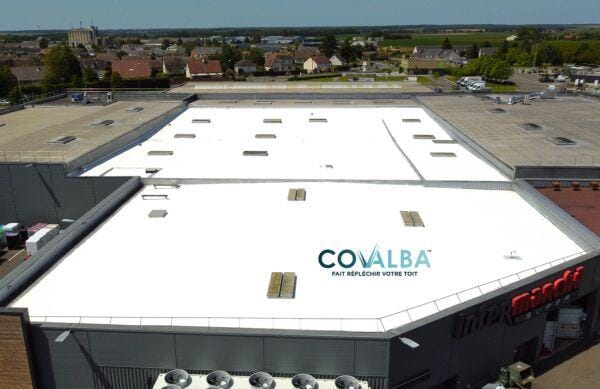
Installation de la peinture réflective CovaTherm SRI=119 sur l'étanchéité bitumineuse.
Voir le cas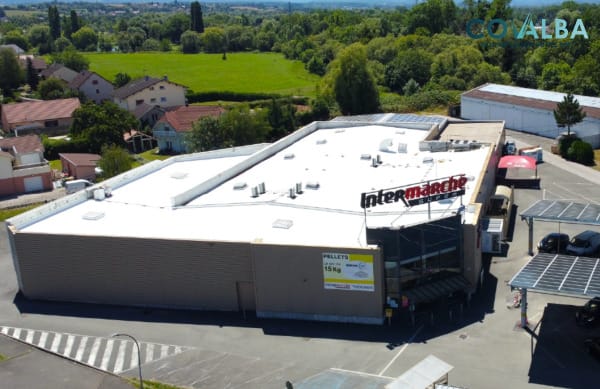
Installation de la peinture réflective CovaTherm SRI=119 sur l'étanchéité bitumineuse.
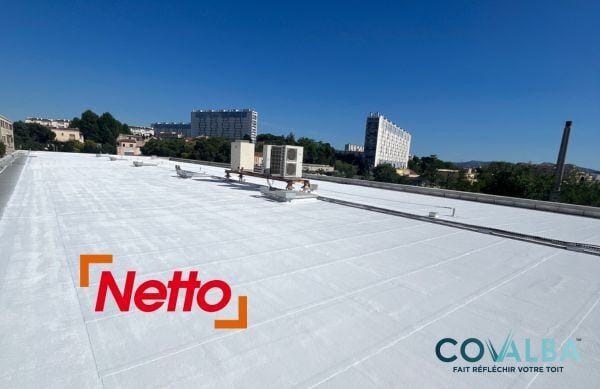
Installation de la peinture réflective CovaTherm 20 sur les toitures bac acier.
Installation de la peinture réflective CovaTherm SRI=119 sur la toiture zinc.
Voir le cas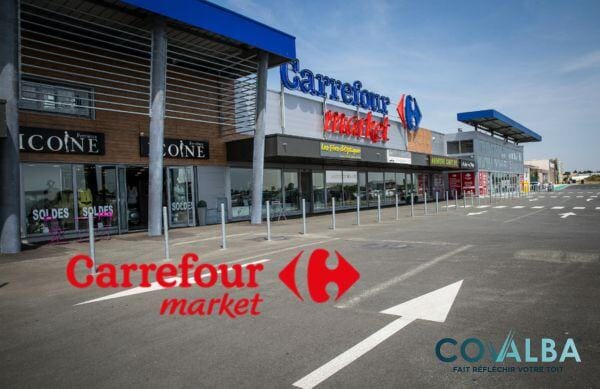
Installation de la peinture réflective CovaTherm 8 sur l'étanchéité bitumineuse.
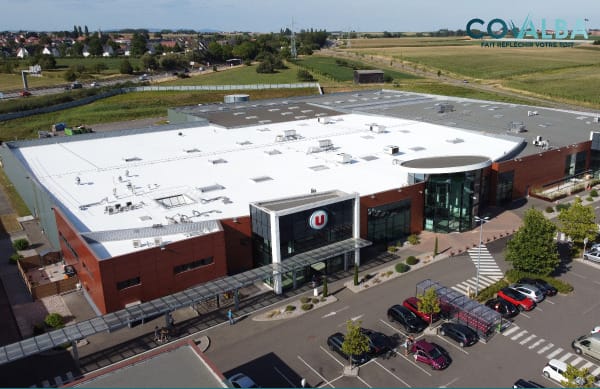
Installation de la peinture réflective CovaTherm SRI=119 sur l'étanchéité bitumineuse.
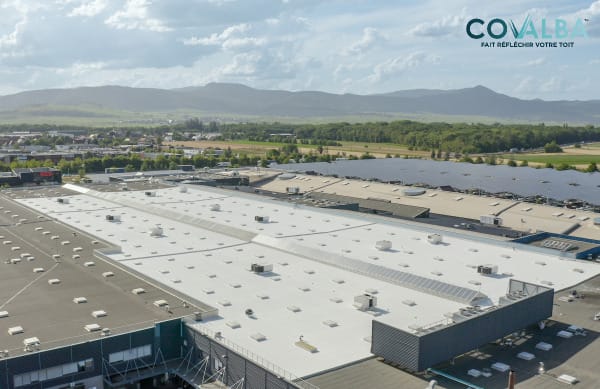
Installation de la peinture réflective CovaTherm SRI=119 sur l'étanchéité bitumineuse.
Voir le cas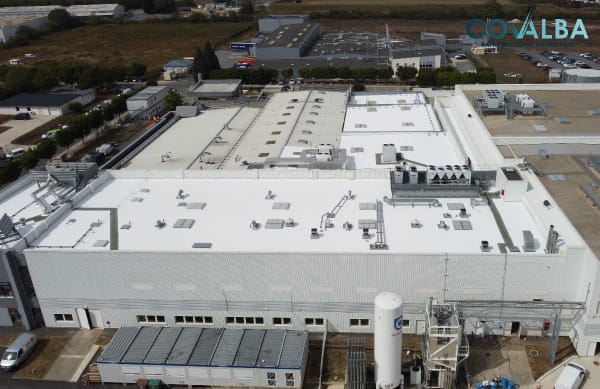
Installation de la peinture réflective CovaTherm SRI=119 sur l'étanchéité bitumineuse.
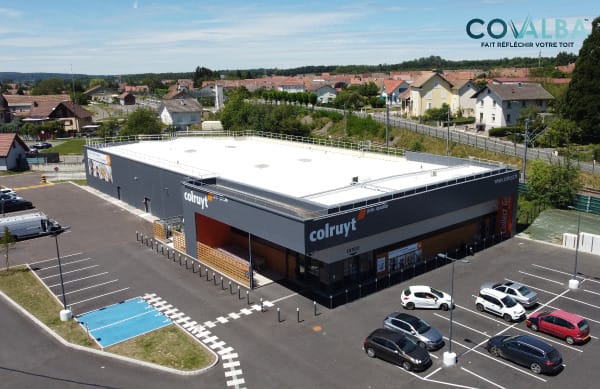
Installation de la peinture réflective CovaTherm SRI=119 sur l'étanchéité bitumineuse.
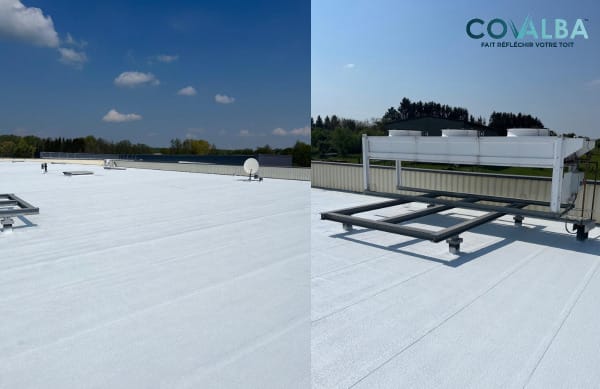
Installation de la peinture réflective CovaTherm 118 sur l'étanchéité bitumineuse.
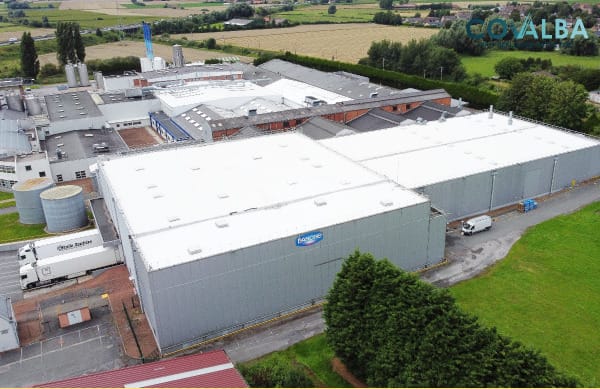
Installation de la peinture réflective CovaTherm SRI=119 sur l'étanchéité bitumineuse. Laquage solaire des lanterneaux.
Voir le cas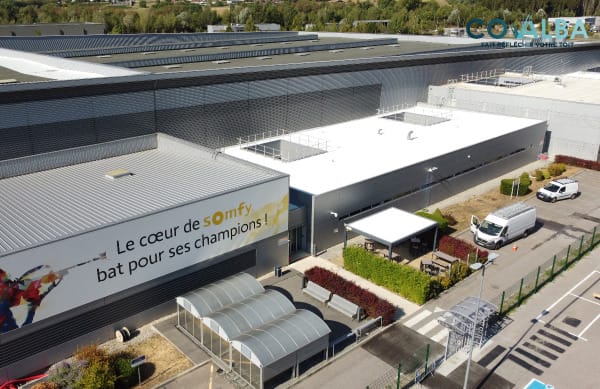
Installation de la peinture réflective CovaTherm SRI=119 sur l'étanchéité bitumineuse.
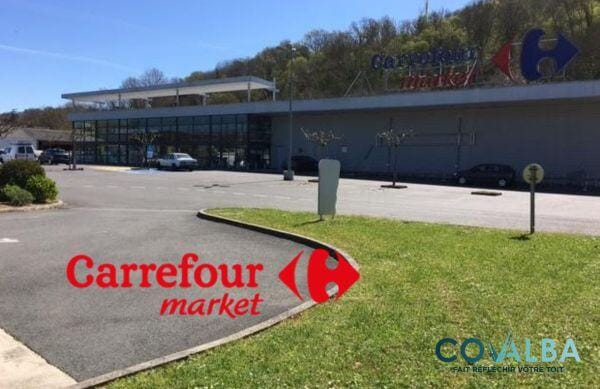
Installation du revêtement réflectif CovaTherm 20 sur l'étanchéité bitumineuse.
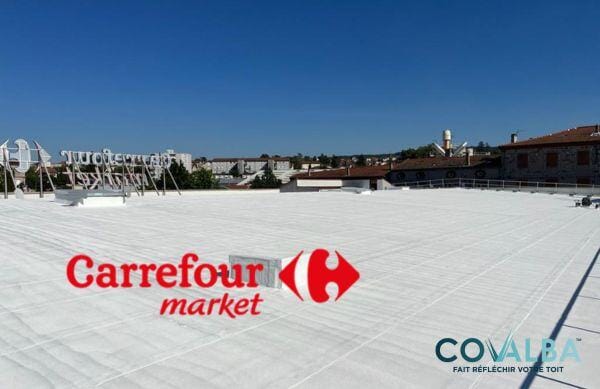
Installation du revêtement réflectif CovaTherm 20 sur l'étanchéité bitumineuse.
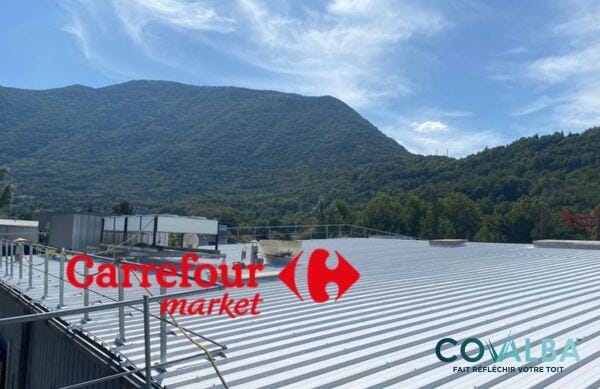
Installation du revêtement réflectif CovaTherm 20 sur l'étanchéité bitumineuse.
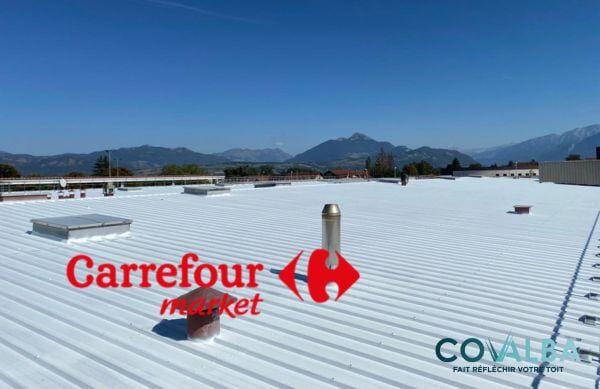
Installation du revêtement réflectif CovaTherm 20 sur l'étanchéité bitumineuse.
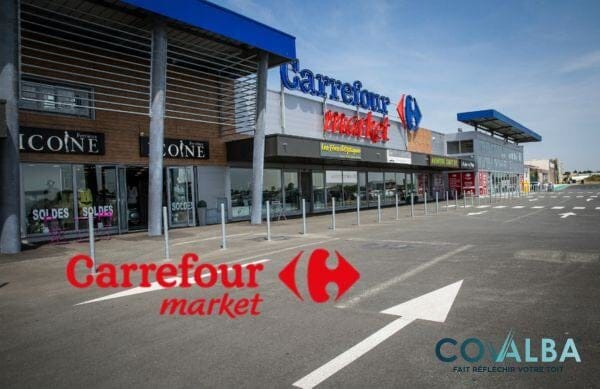
Installation du revêtement réflectif CovaTherm 20 sur l'étanchéité bitumineuse.
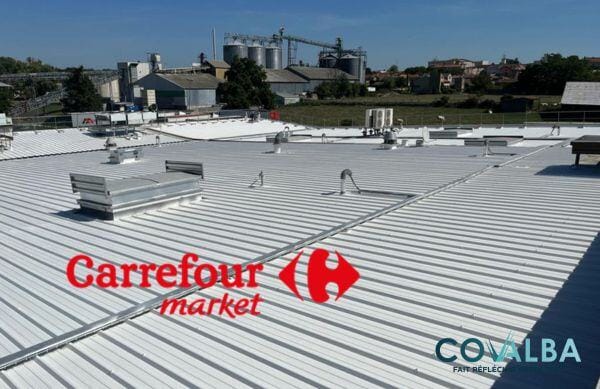
Installation du revêtement réflectif CovaTherm 20 sur l'étanchéité bitumineuse.
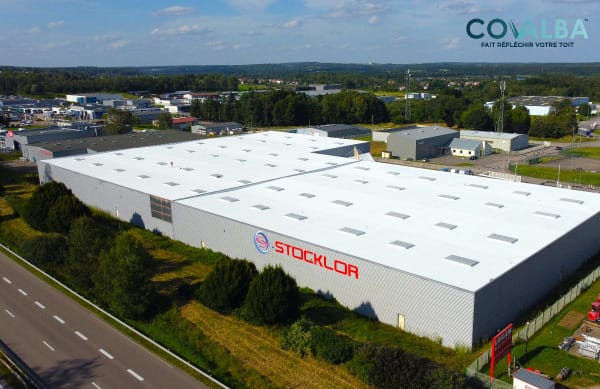
Installation de la peinture réflective CovaTherm SRI=119 sur l'étanchéité bitumineuse
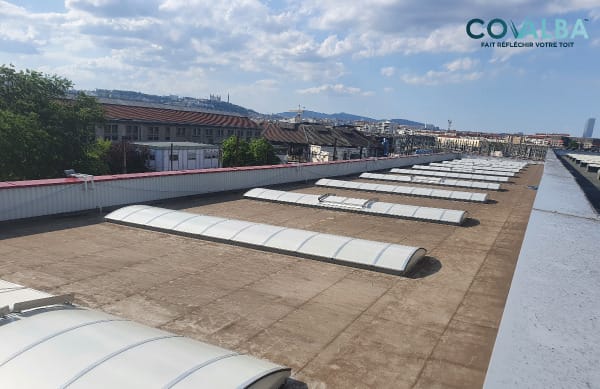
Laquage solaire des voûtes éclairantes d'un technicentre.
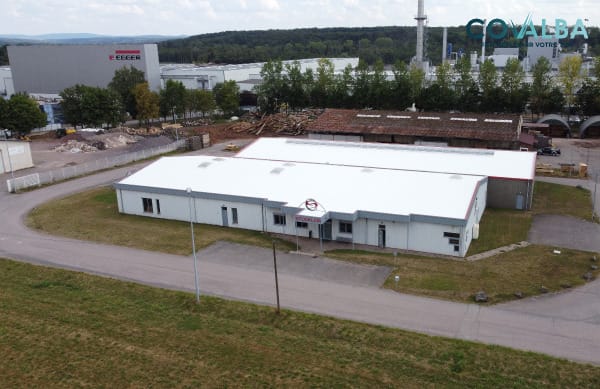
Installation de la peinture réflective CovaTherm SRI=119 sur l'étanchéité bitumineuse
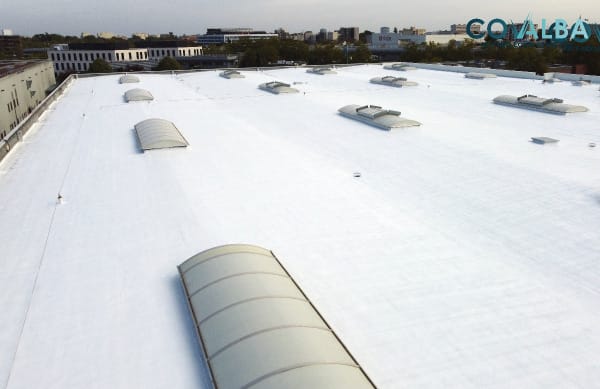
Installation de la peinture réflective CovaTherm SRI=119 sur l'étanchéité bitumineuse.
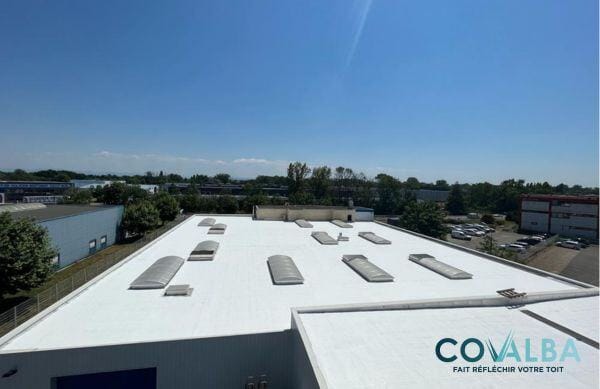
Installation de la peinture réflective CovaTherm SRI=119 sur l'étanchéité bitumineuse.
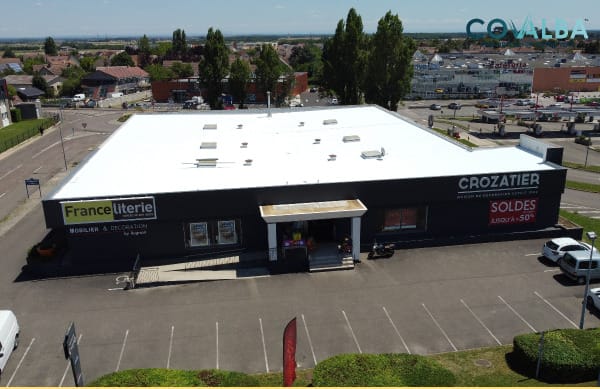
Installation de la peinture réflective CovaTherm SRI=119 sur l'étanchéité bitumineuse.
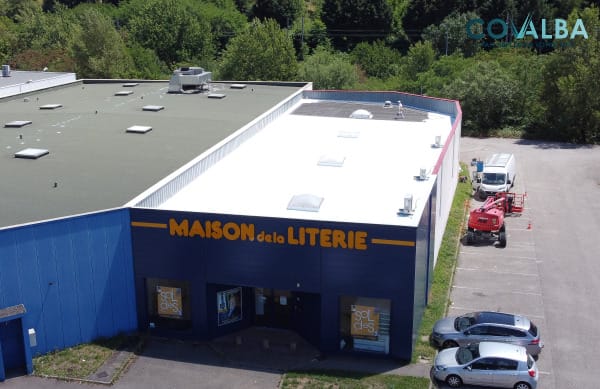
Installation de la peinture réflective CovaTherm SRI=119 sur l'étanchéité bitumineuse.
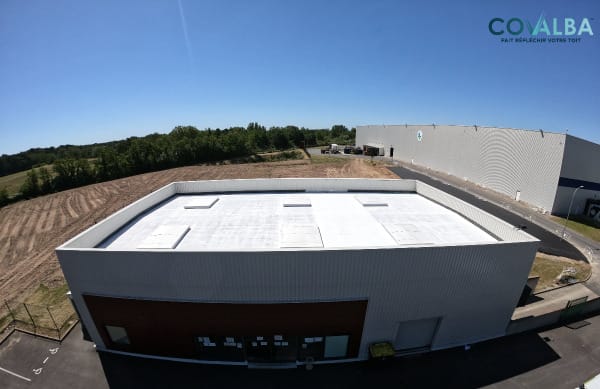
Installation de la peinture réflective CovaTherm SRI=119 sur l'étanchéité bitumineuse. Laquage solaire des voûtes éclairantes et lanterneaux.
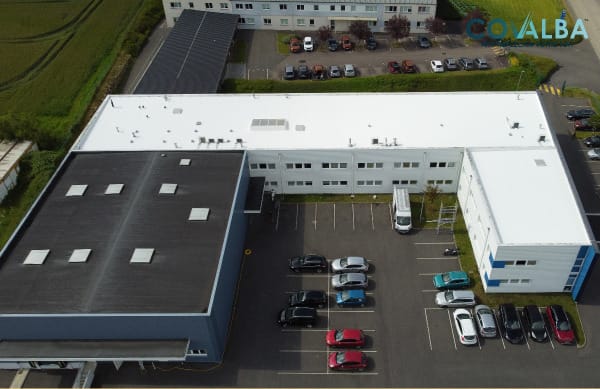
Installation de la peinture réflective CovaTherm SRI=119 sur l'étanchéité bitumineuse
Voir le cas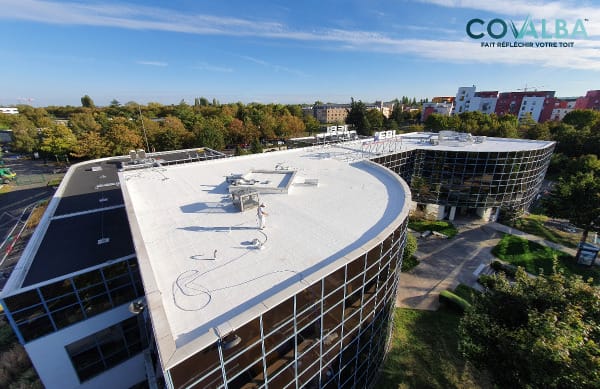
Installation de la peinture réflective CovaTherm SRI=119 sur l'étanchéité bitumineuse
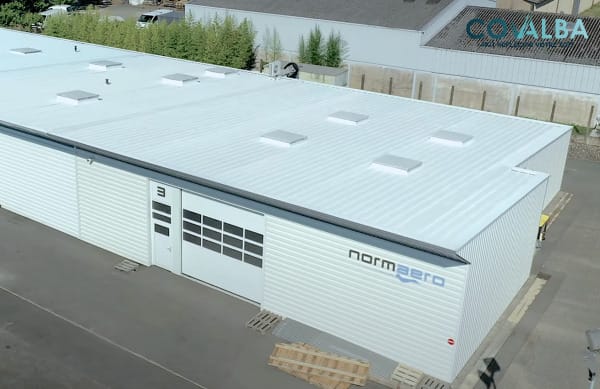
Installation de la peinture réflective CovaTherm SRI=119 sur une toiture bac acier.
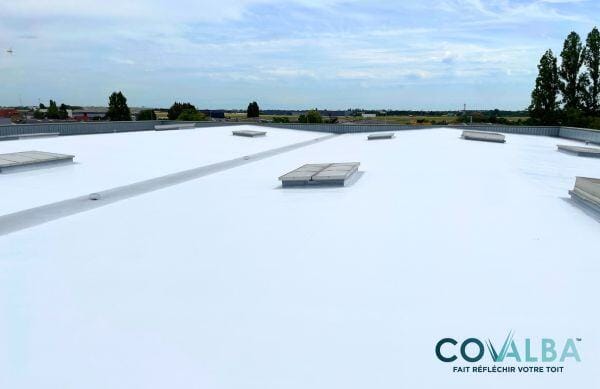
Installation du revêtement réflectif CovaSeal 20 sur l'étanchéité PVC.
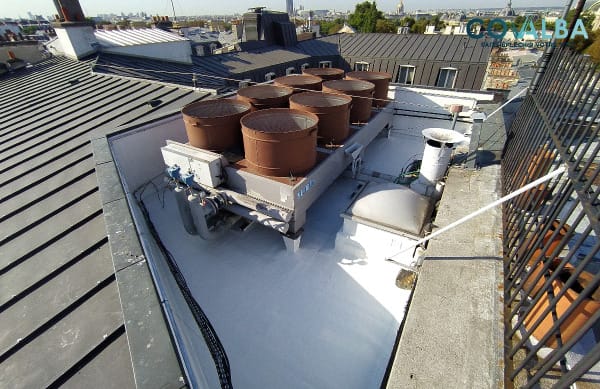
Installation de la peinture réfléchissante CovaTherm SRI=119 sur une étanchéité bitumineuse.
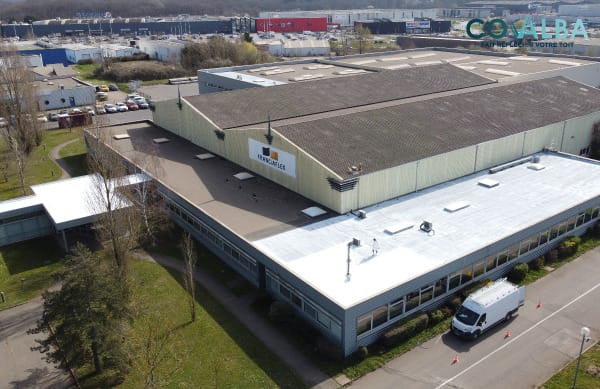
Installation de la peinture réflective CovaTherm SRI=119 sur l'étanchéité bitumineuse. Laquage solaire des voûtes éclairantes et lanterneaux.
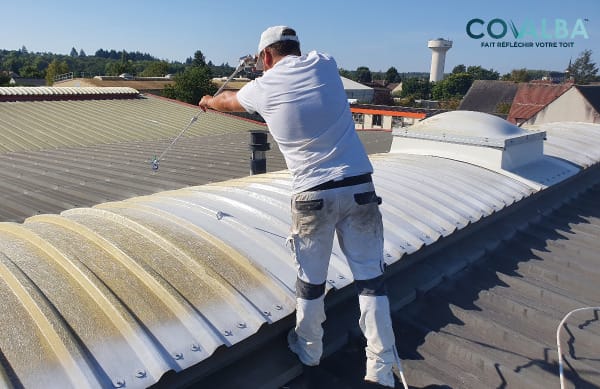
Laquage solaire des voûtes éclairantes.
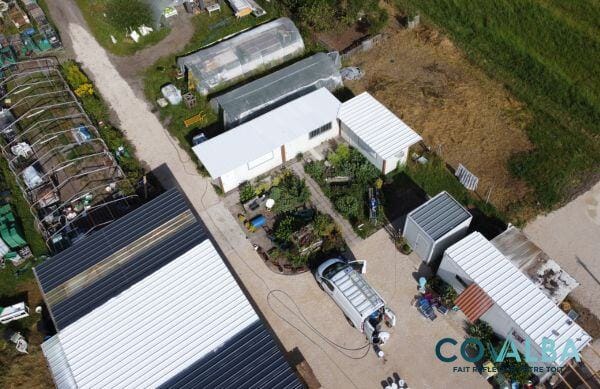
Installation de la peinture réflective CovaTherm 8 sur les toitures bac acier.
Ils économisent déjà avec Covalba
FAQ
The questions operators, CIOs and infrastructure managers ask before a roofing project.
No. Everything happens on the roof, from outside. The spraying machines stay on the ground and only the hoses go up. No power cut, no cooling shutdown and no access to the halls are needed. Your operations continue throughout the works.
No drilling and no removal of the roof covering. There is therefore no opening towards the inside. The substrate is prepared by high-pressure cleaning, without general sanding. Our teams follow your access, badge and safety procedures, and the works stay limited to the roof.
Chillers, heat exchangers and cable trays are surveyed at the diagnosis stage, then protected and worked around during application. Phasing is agreed with your operations team so that no equipment in service is ever isolated. Areas under equipment are treated during your maintenance windows.
The gain is direct. A cool roof does not replace your cooling plant: it reduces the heat it has to remove. It cuts the solar radiation taken in by the roof, lowers the temperature under the roof by 8 to 10 °C in summer and can cut up to 40% of the cooling linked to the roof.
Bituminous membrane, steel deck, EPDM, PVC, fibre cement and concrete. The survey confirms the state of the substrate and points to the right system: CovaTherm on a sound roof, CovaSeal 20 where waterproofing must be renewed, CovaMetal 20 on a steel deck to protect from corrosion.
Yes for tertiary and industrial buildings: the CEE datasheet BAT-EN-112 covers reflective roof coatings. The energy saved is then reported on the OPERAT platform under the décret tertiaire (French tertiary decree), which requires -30% by 2030, -40% by 2040 and -50% by 2050.
Request a study. We estimate the temperature drop, the cooling saved and the CEE eligibility of your roof. Works are 100% roof-side, with no service interruption.
A data center removes the heat from its equipment around the clock. In summer, the roof adds a share that mechanical cooling has to absorb on top.
Heat in a data hall comes first from the electrical power drawn by servers, storage and networking. The roof adds a share that comes from outside: the solar radiation captured by the covering and passed to the spaces below. A dark roof absorbs that radiation and heats up sharply. A light, highly reflective surface sends most of it back. A cool roof acts on that external share, upstream of every cooling system. On an existing building, this lever touches neither the layout of the halls nor the air distribution.
Cooling levers work as a cascade. Free cooling uses outside air as long as its temperature allows. Adiabatic cooling, which uses water evaporation, takes over when that air gets too warm. Mechanical cooling handles what is left, during the tightest hours. The cool roof comes before that cascade. By reducing the heat taken in by the covering, it lengthens the periods when outside air is enough and runs the compressors less often. None of these systems is replaced; all of them are called on less.
The critical point arrives during a heatwave. Cooling demand climbs just as chiller efficiency drops and outside air is no longer enough. On those days, every degree avoided upstream relieves your cooling plant. A cool roof lowers the temperature under the roof by 8 to 10 °C and removes 7 to 8 °C of thermal load on the roof, from the first summer after application. The gain is passive and permanent: no consumption, no control, no wearing parts.
Data halls and technical rooms are mostly covered in steel deck or bituminous membrane. These roofs carry a lot of equipment: chillers, heat exchangers, cable trays. 80% of Covalba projects are on bituminous membranes over ten years old, hardened by UV and thermal shock. The survey then points to the right system: CovaTherm on a sound substrate, CovaSeal 20 when the waterproofing has to be renewed, CovaMetal 20 on a steel deck to protect from corrosion.
Tertiary and industrial buildings covered by the décret tertiaire (French tertiary decree) report their consumption on the OPERAT platform. They target -30% by 2030, -40% by 2040 and -50% by 2050. Reflective roof coatings fall under the CEE datasheet BAT-EN-112, reserved for tertiary and industrial buildings. On budget the gap is clear: €20 to €22/m² supplied and applied for a long-life cool roof, against €80 to €100/m² for a new membrane and around €150/m² for renewed insulation and waterproofing.
A hosting site never stops. The works are therefore carried out entirely from the roof: machines on the ground, hoses on the roof, no removal of the covering, no access to the halls. Duration runs from a few days to a few weeks depending on the surface. Areas under equipment are treated during your maintenance windows. The coating then protects the membrane from UV and pushes its replacement back 8 to 10 years. French labour law also requires employers to protect staff from heat, including in your control rooms, without setting a maximum temperature.