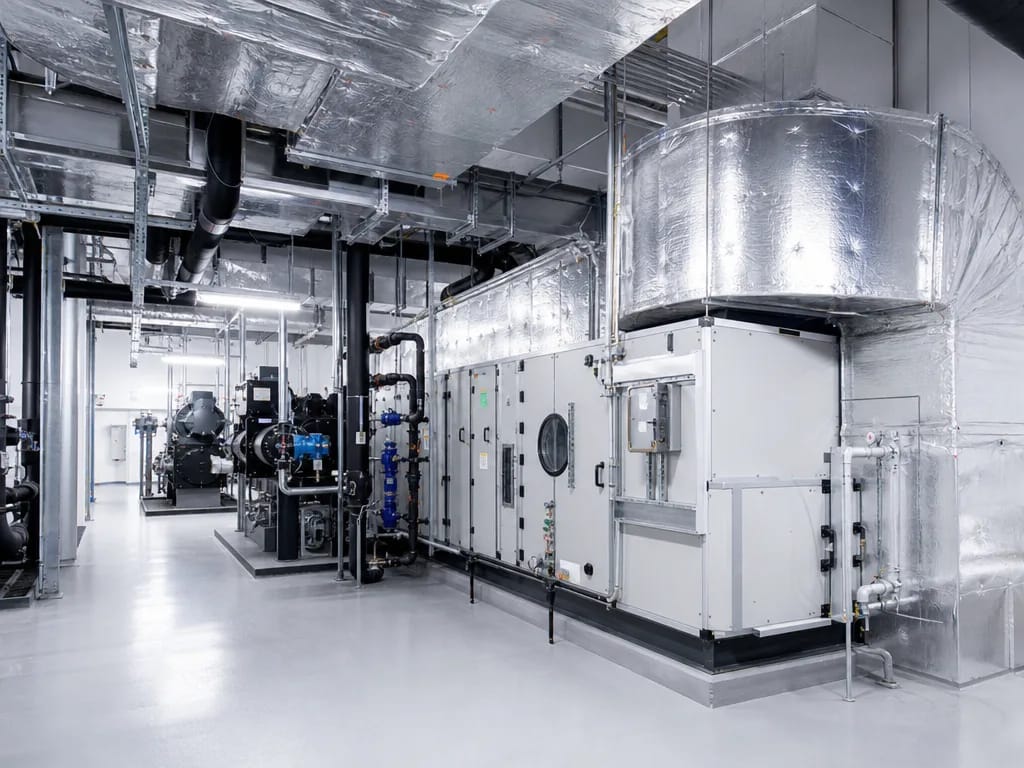
HVAC under pressure
Air handling units and chillers continuously offset the heat received through the roof.
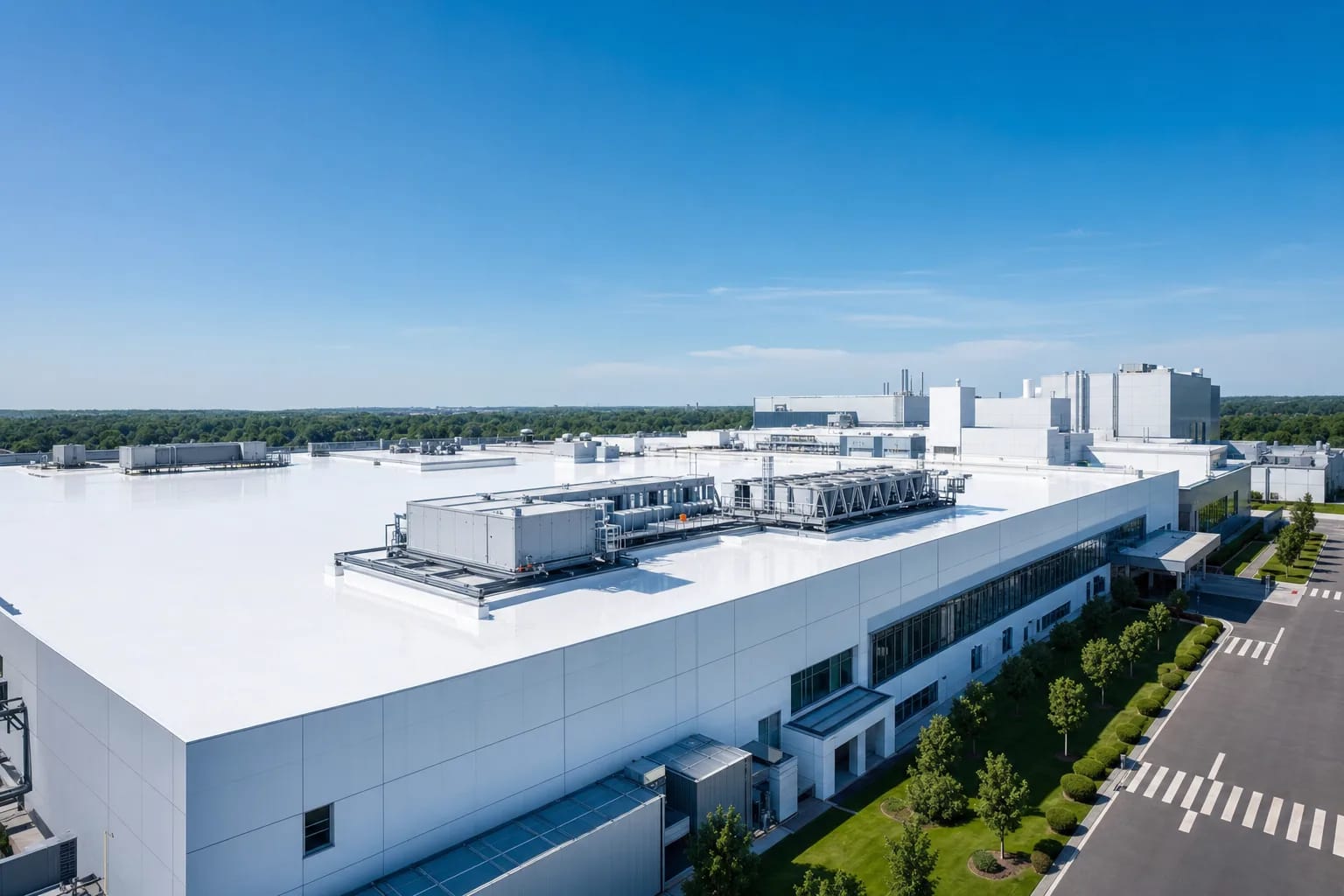
Relieve your HVAC systems in summer, with no interior work and no impact on your GMP/GxP certifications.
-7 to -8°C
load on the roof
up to -40%
on roof-related cooling
0 impact
on your certifications
Personalised response within 48h
On a pharmaceutical site, thermal stability is a regulatory imperative. A dark, exposed roof adds a load to already strained HVAC systems.
Air handling units and chillers continuously offset the heat received through the roof.
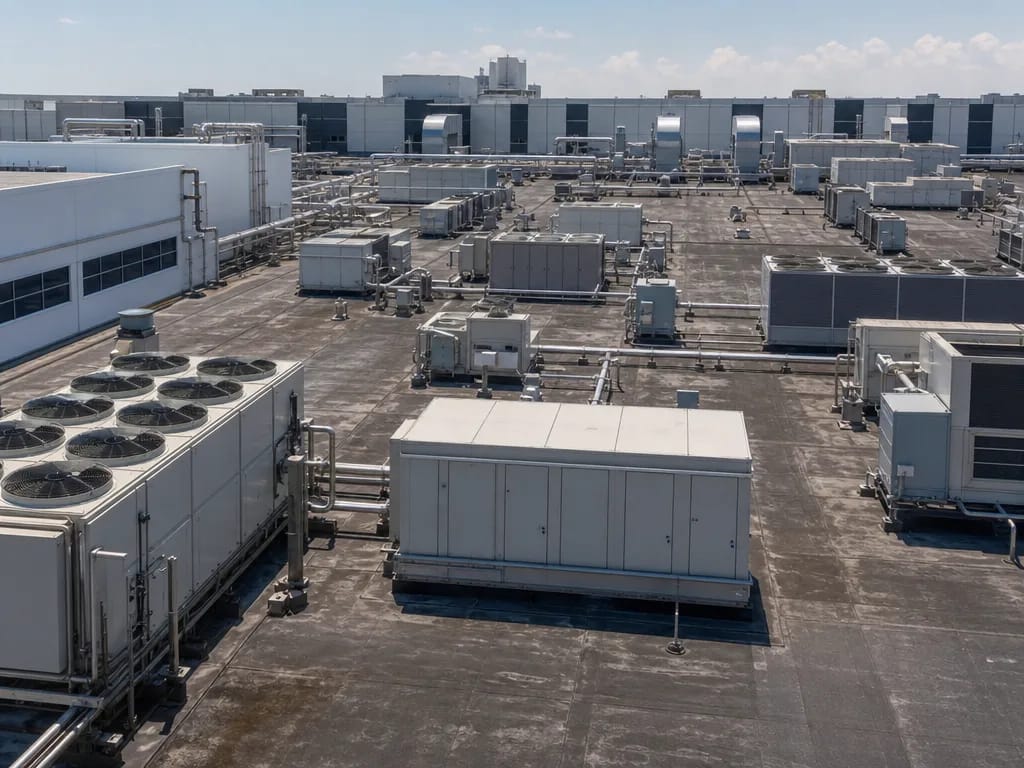
Holding setpoints in summer is costly when the roof reaches 70-80°C.
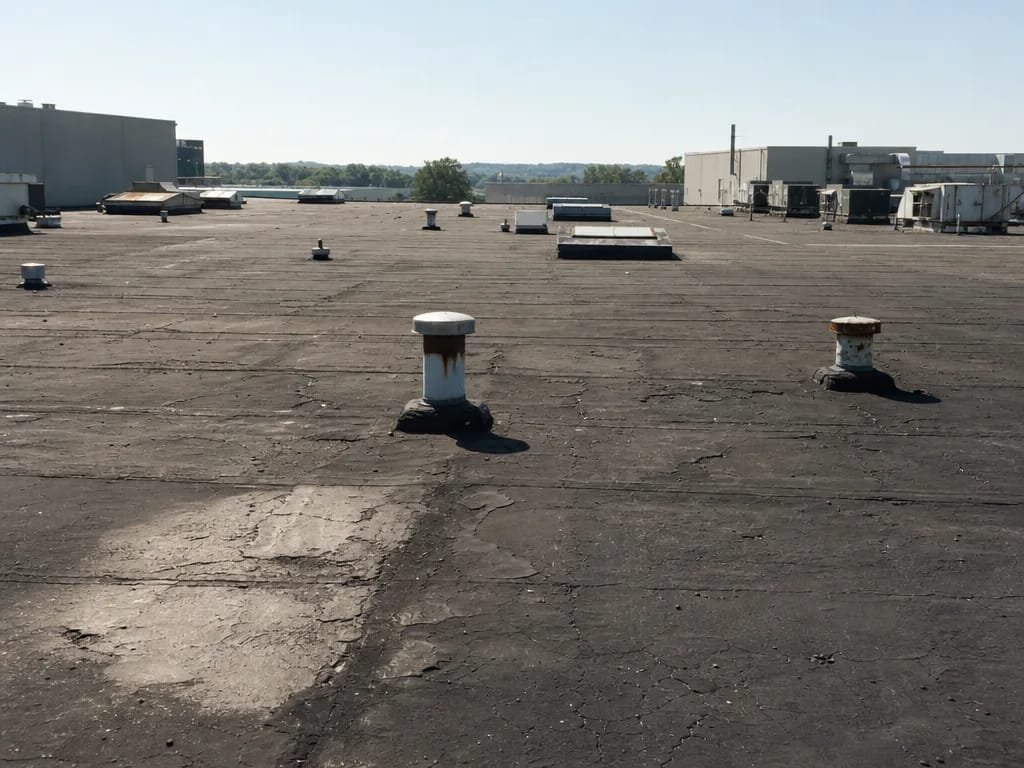
Many pharma sites have old bituminous waterproofing, weakened by UV.
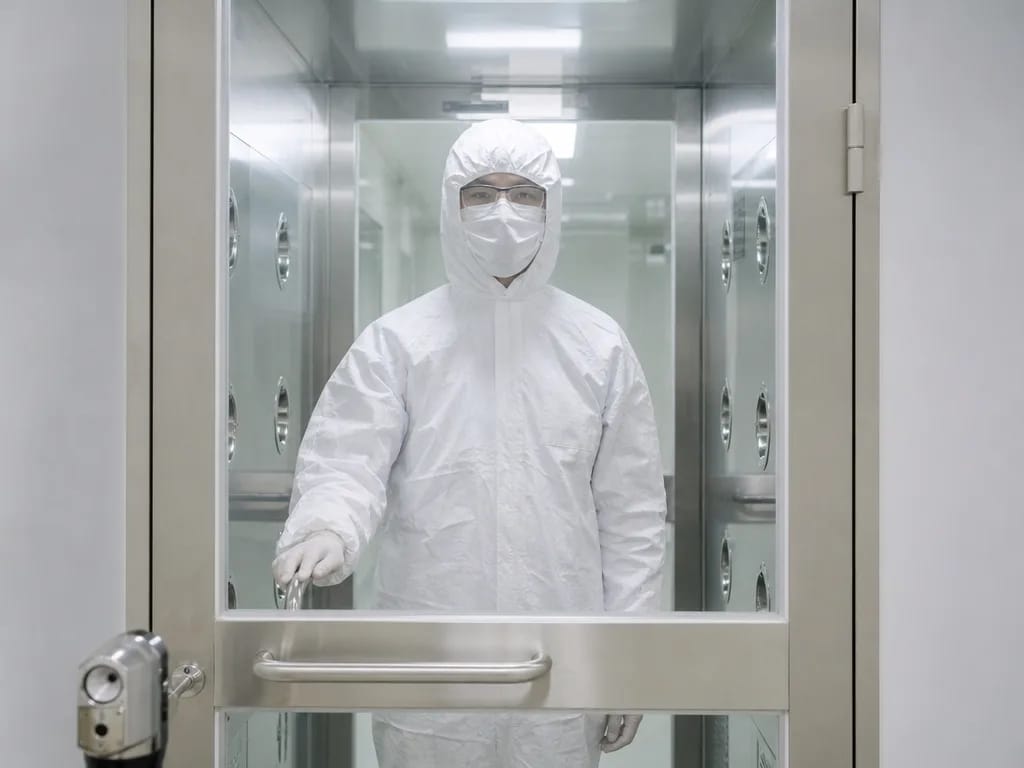
Interior works raise questions of qualification, clean zones and audits.
The simplest, lowest-risk lever: act on the roof, from the outside.
Cool roof acts at the source: it stops the roof from absorbing heat, so there is less heat for your HVAC systems to offset — without altering your processes or regulated zones.
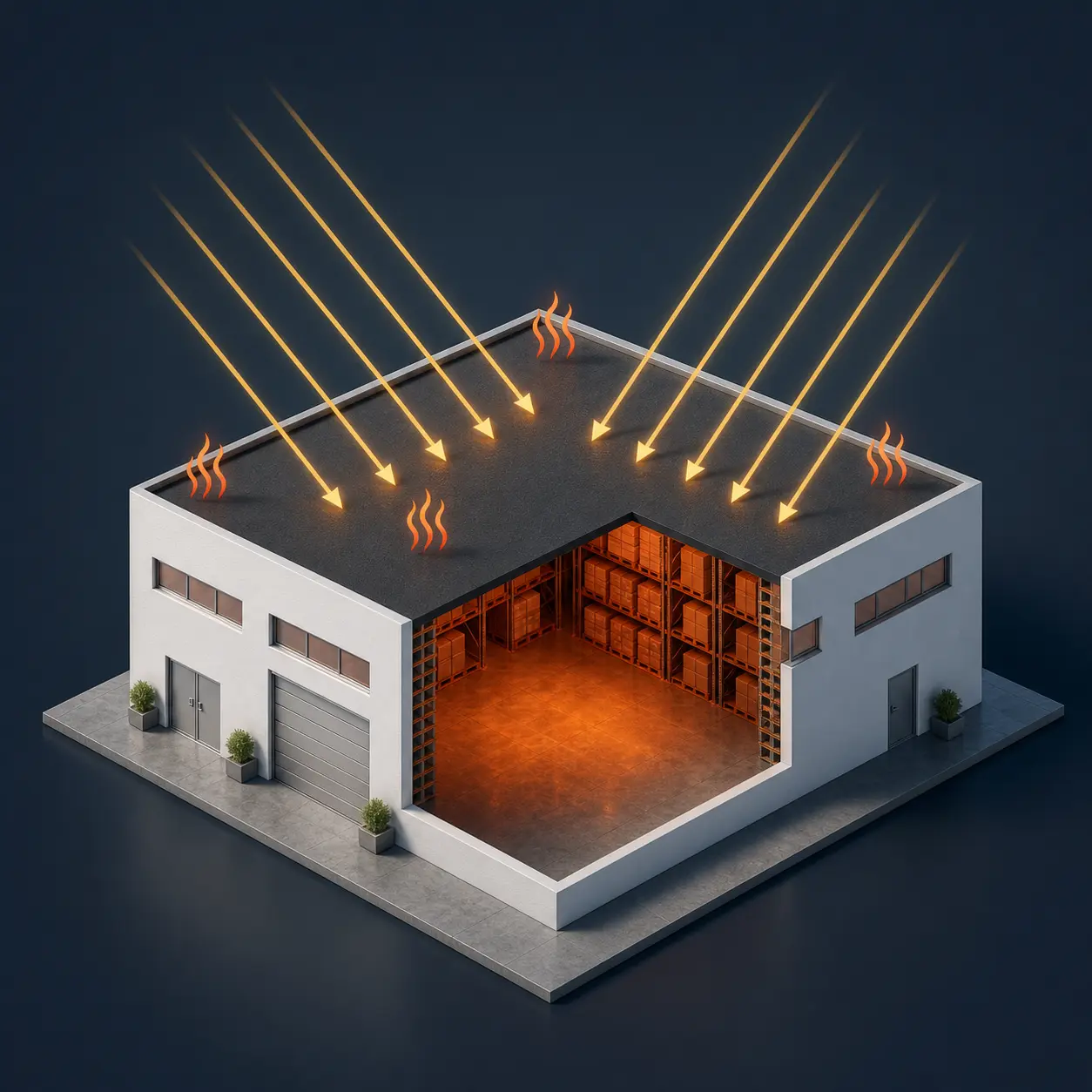
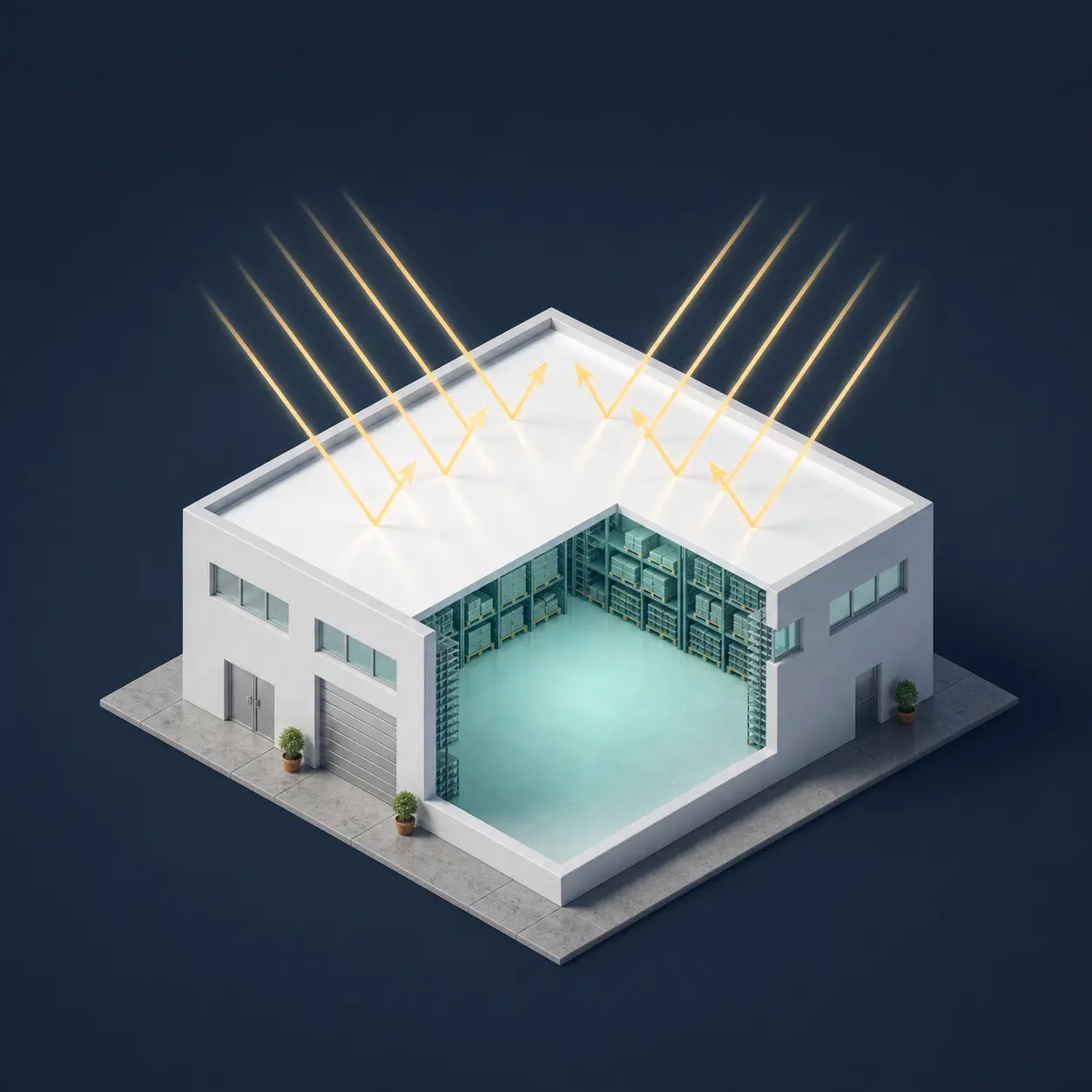
A well-applied cool roof de-risks the decision: it acts on the roof, not on your compliance posture.
Durability
On a pharma site, durability and stable performance matter as much as price: a coating that loses its reflectivity becomes recurring maintenance.
Low cost to apply
Price per m²
~€15
Service life
2-5 years
Over 10 years
€25-30
Stable performance for demanding sites
Price per m²
€20-22
Service life
8-10 years
Over 10 years
€20-22
Polyurethane systems with an anti-UV finishing topcoat (CovaTherm 20) keep a high solar reflectance index (SRI 118 after accelerated ageing) over the long term.
On a permanently air-conditioned site, cooling savings add up every summer and the coating durably protects the roof.
up to -40%
on roof-related cooling consumption
ROI < 2-3 yrs
on an air-conditioned / controlled-conditions site
up to 20 years
of service life (CovaTherm 20, SRI 118)
0 impact
on certifications and audits
The real gain depends on surface area, regulation systems and climate zone. Covalba quantifies your case during the technical study.
By cutting solar gain through the roof, cool roof directly reduces the load transmitted to your HVAC systems.
From the first summer
-7 to -8°C
of thermal load on the roof
Less heat to offset for chillers and air handling units.
A reduced thermal load helps hold setpoints during summer peaks.
No interior work: your audits and certifications are unaffected.
The coating protects the substrate and delays roof replacement.
A passive action to value within your decarbonation roadmap.
Beyond energy, here is how cool roof adapts to each type of site.
GMP/GxP production, laboratories, regulated warehouses and healthcare logistics: thermal control and compliance are critical.
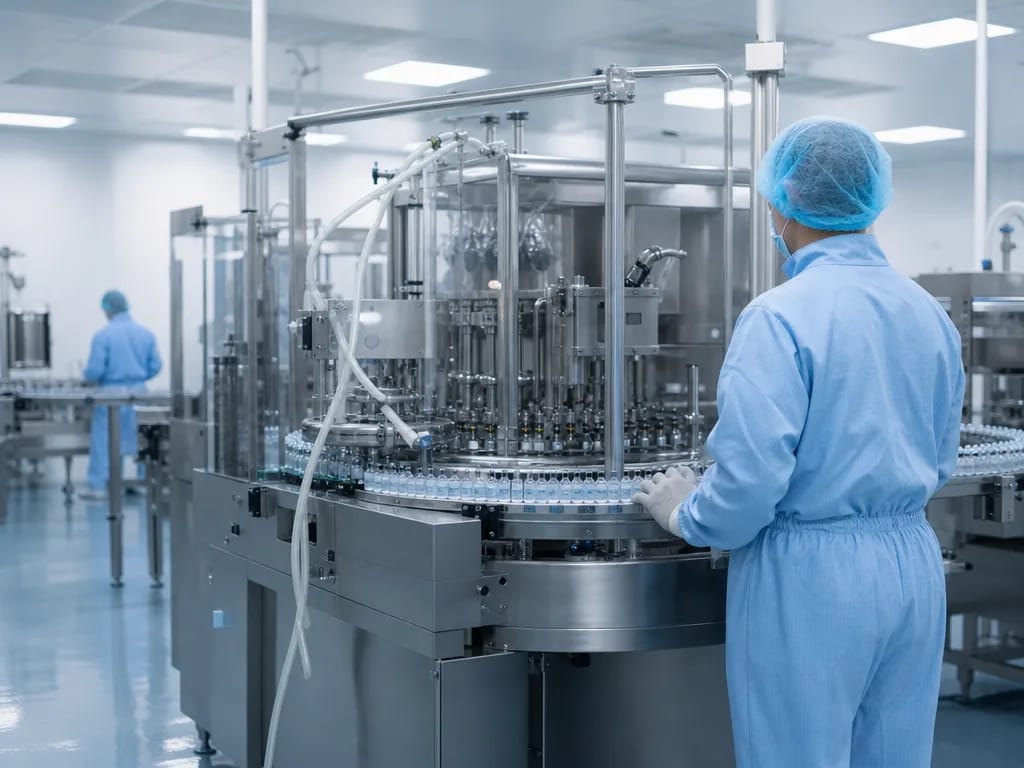
Reduce the thermal load on controlled environments.

Stabilise the ambient conditions without touching the installations.
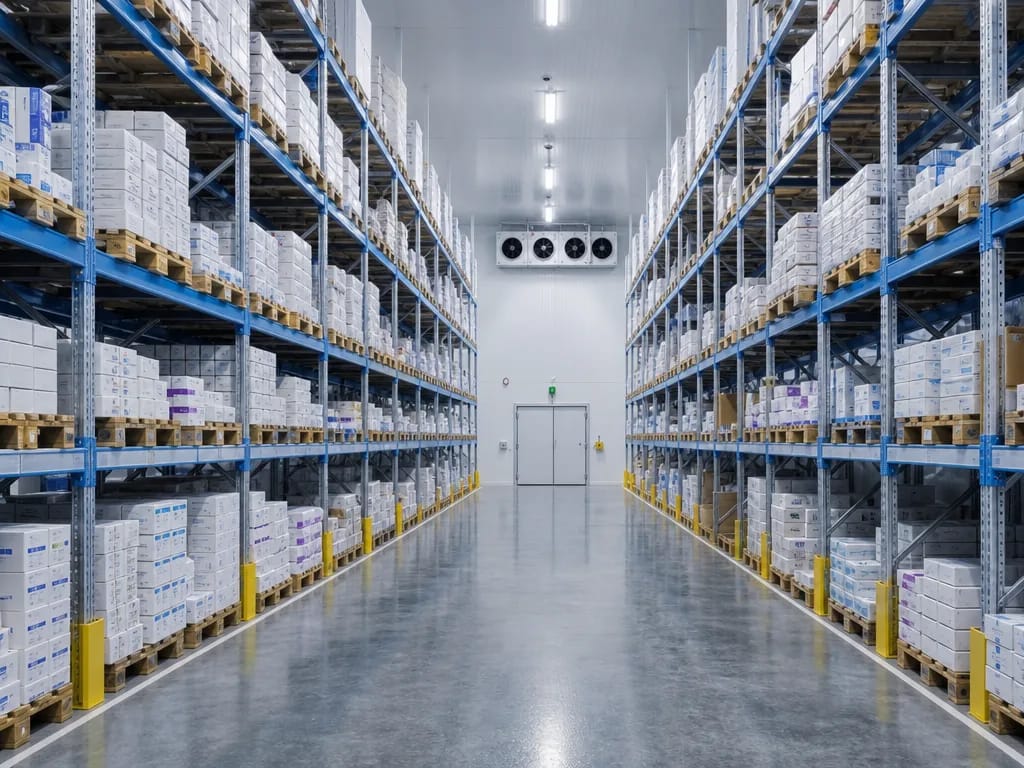
Relieve cooling on regulated storage areas.
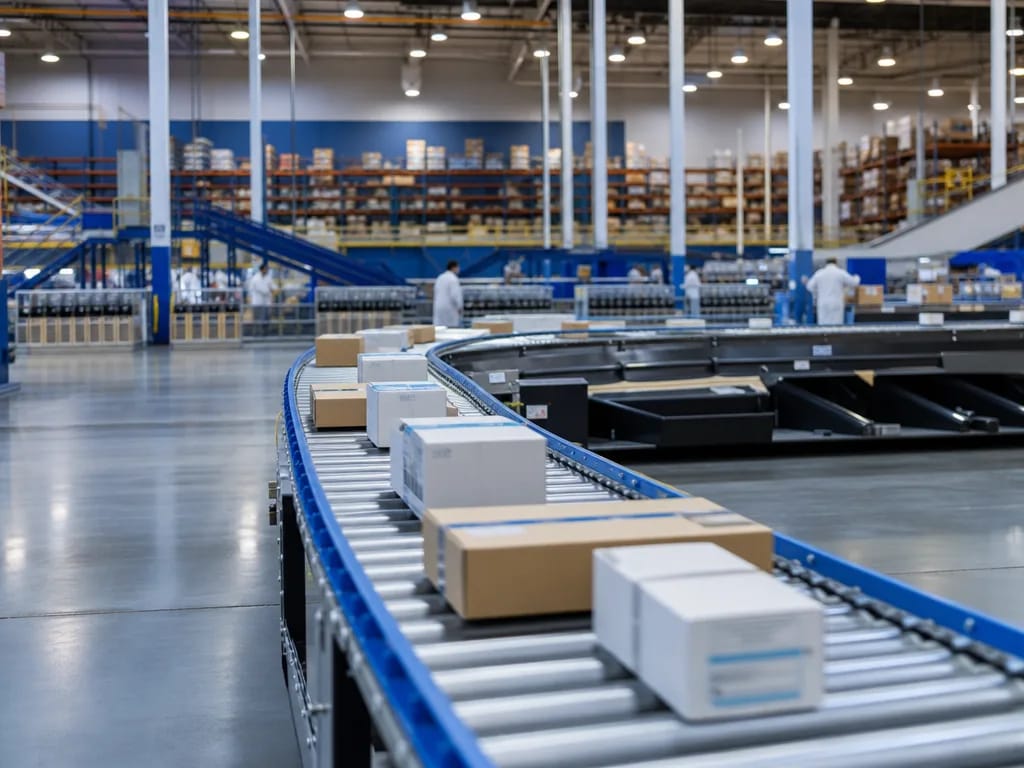
Limit the heating of large volumes.

Preserve a stable environment for packaging.
The key question: how to intervene without disrupting a site under controlled conditions?
A controlled operation
Everything happens from the outside, with no penetration into your regulated zones. Your audits and production are not impacted.
Assessment of the roof, access and your documentary requirements (procedures, PPE, buffer zones).
High-pressure cleaning and substrate preparation, in line with the site's protocols.
Continuous spray application. Machines on the ground, only the hoses go up.
Quality verification and handover of traceability records for your audits.
No work in clean zones · No production downtime
Surface temperature readings and operator feedback from industrial sites equipped with Covalba cool roof.
-7 to -8°C
of thermal load on the roof
up to -40%
on roof-related cooling
0 downtime
in production, 100% external works




Before launching your project, here are the most common questions.
The questions most often raised by infrastructure and maintenance directors of pharmaceutical sites.
Another question? Let's talkRequest a tailored study: we quantify the thermal gain and the cooling savings of your roof. 100% roof-side works, audit-safe.
Pharmaceutical dossier
Pharmaceutical sites operate under controlled conditions. In summer, a dark roof adds a significant thermal load to already strained systems.
A GMP/GxP unit maintains strict setpoints via AHUs and chillers. When the roof reaches 70-80°C, part of that heat is transmitted and must be offset continuously.
Cool roof is applied entirely on the roof, with no penetration into clean zones and no modification of interior installations. It changes neither your setpoints nor your compliance posture.
A reflective roof combines high solar reflectance and high emissivity. This passive cooling is documented by public laboratories and translates into a measurable drop in cooling consumption.
Covalba favours polyurethane systems with an anti-UV topcoat (CovaTherm 20) that keep a high SRI over the long term. For tired waterproofing, CovaSeal combines waterproofing and thermal performance.
Bituminous membrane, steel deck, EPDM, PVC, fiber cement, concrete: a technical diagnosis validates the substrate and steers towards the right solution.
Beyond cooling, cool roof extends the life of the waterproofing by protecting the substrate from UV and thermal shocks, and fits into a decarbonation roadmap.
Sources

