
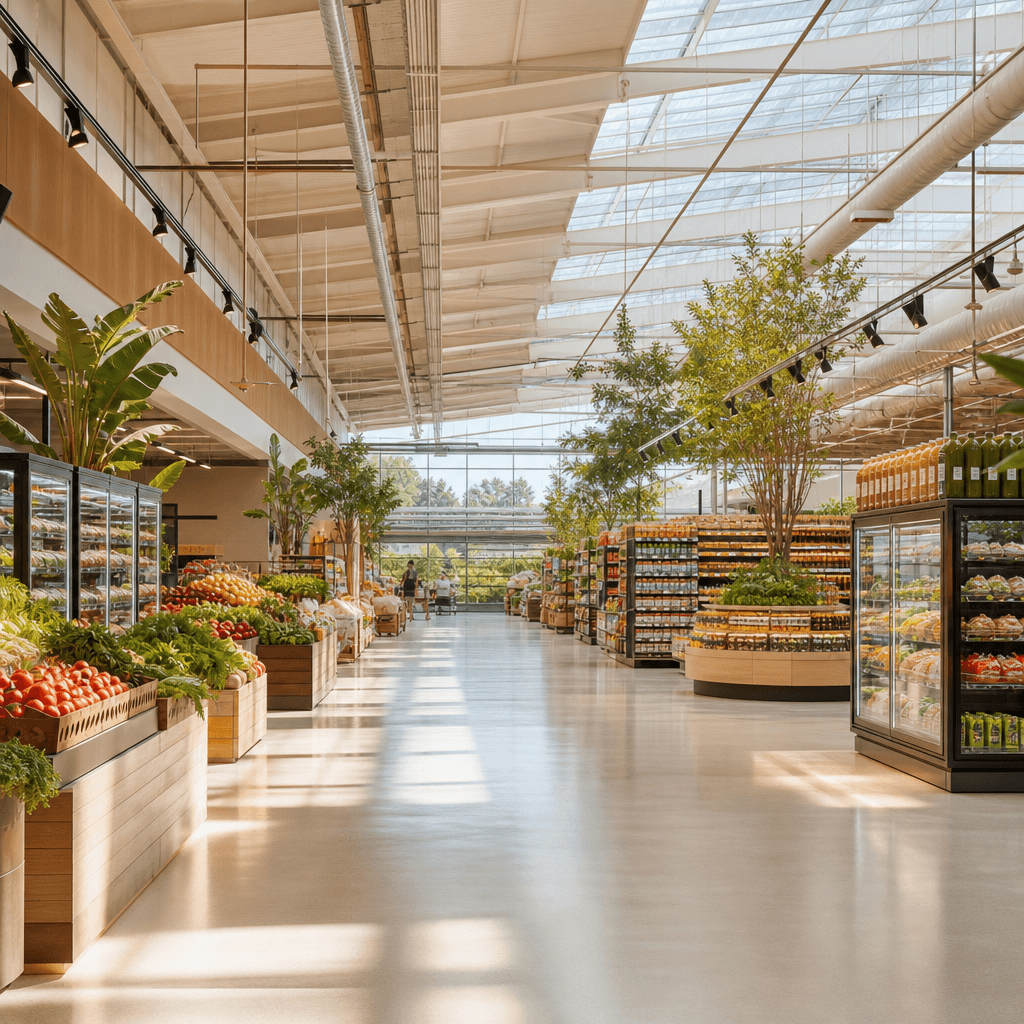
Your customers cut their visits short
An overheated store cuts the time shoppers spend in the aisles.
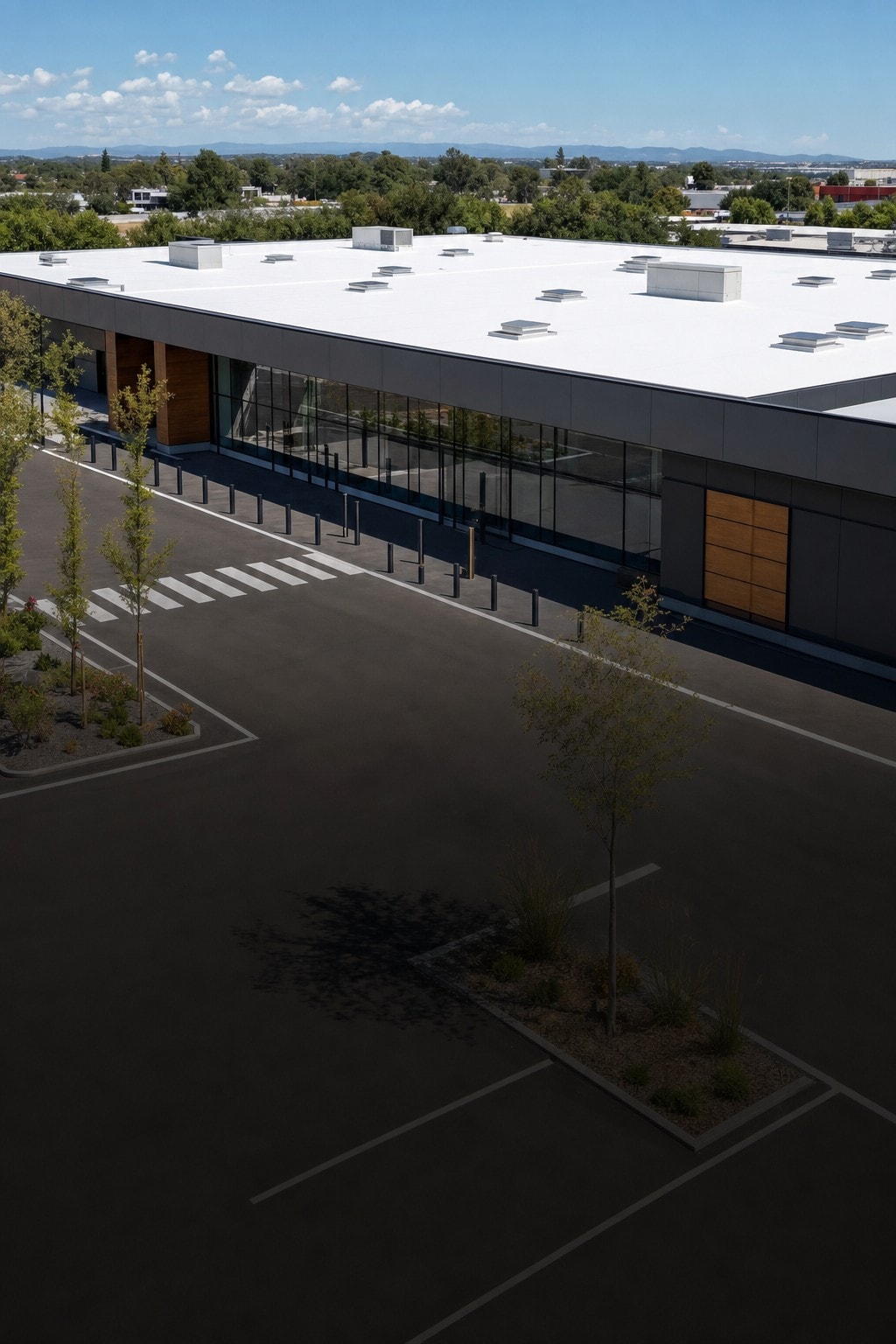
More comfortable customers, a lower cooling load, better-protected refrigerated sections.
-8 to -10°C
under the roof
-40%
cooling needs
Quote
based on a custom assessment
Réponse personnalisée sous 48h
In summer, a large commercial roof soaks up the sun and radiates heat inward. Customers stay for less time, air conditioning works harder and refrigerated sections struggle.
An overheated store cuts the time shoppers spend in the aisles.
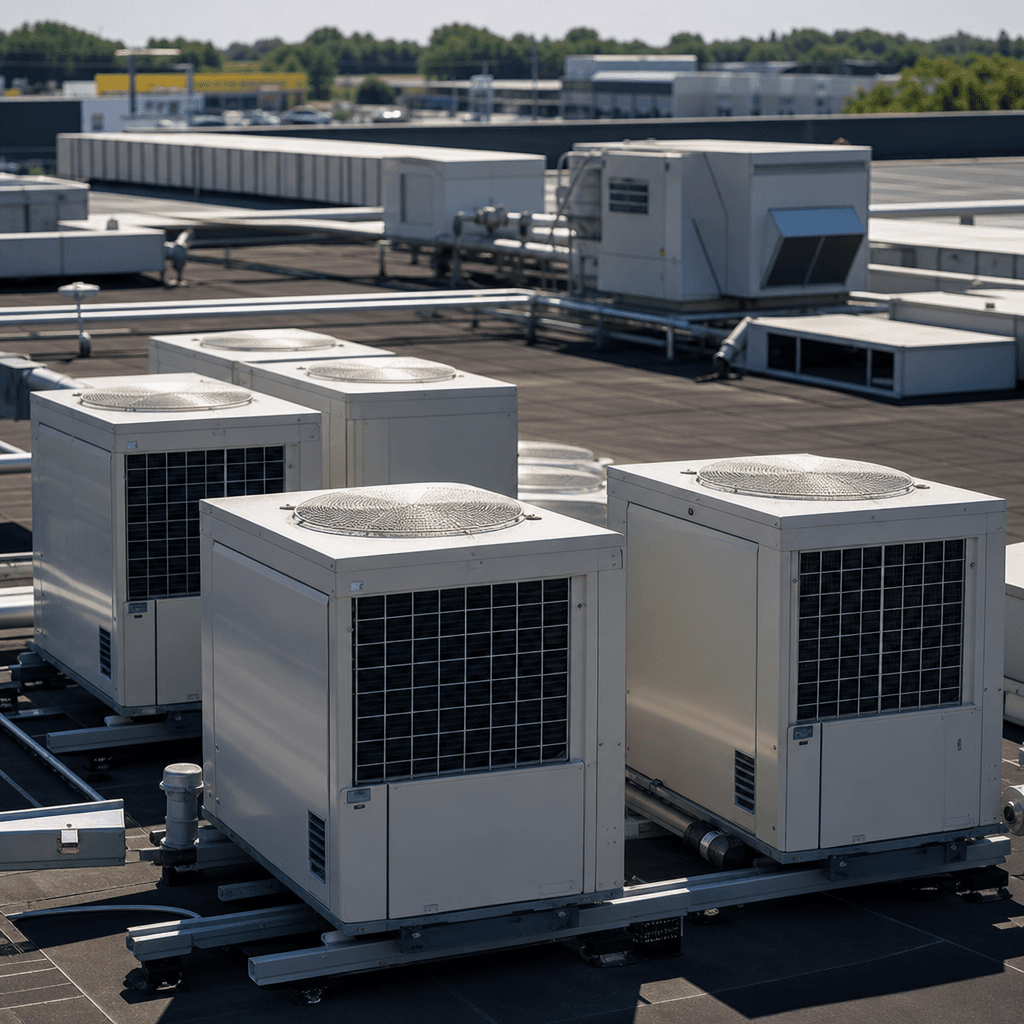
The units run nonstop to keep up and the bill climbs.
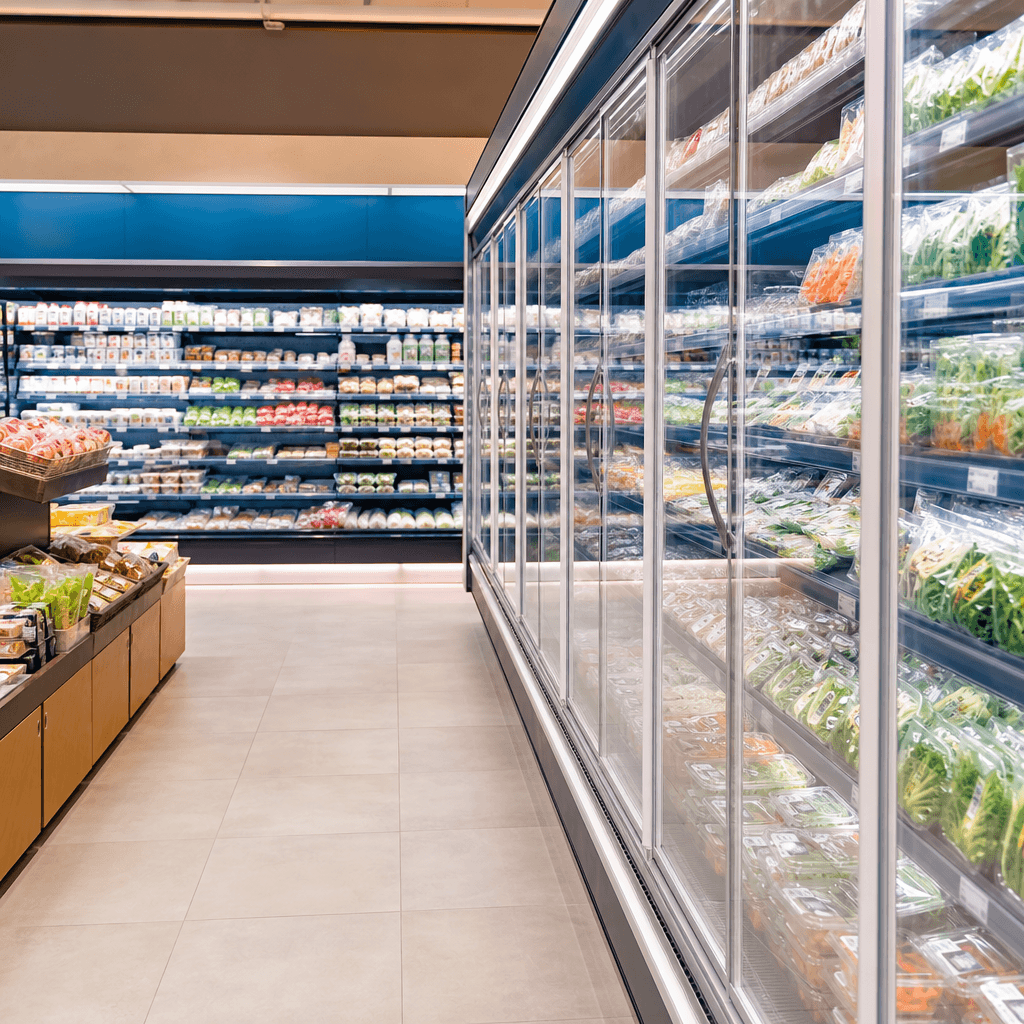
Refrigerated cabinets work harder to maintain the cold chain.

Checkouts, reception and aisles endure the heat while facing the public.
The common cause: a roof that absorbs heat instead of reflecting it back.
Same principle as on logistics warehouses: the coating treats the roof to reduce the heat transmitted into the building, without disrupting operations.
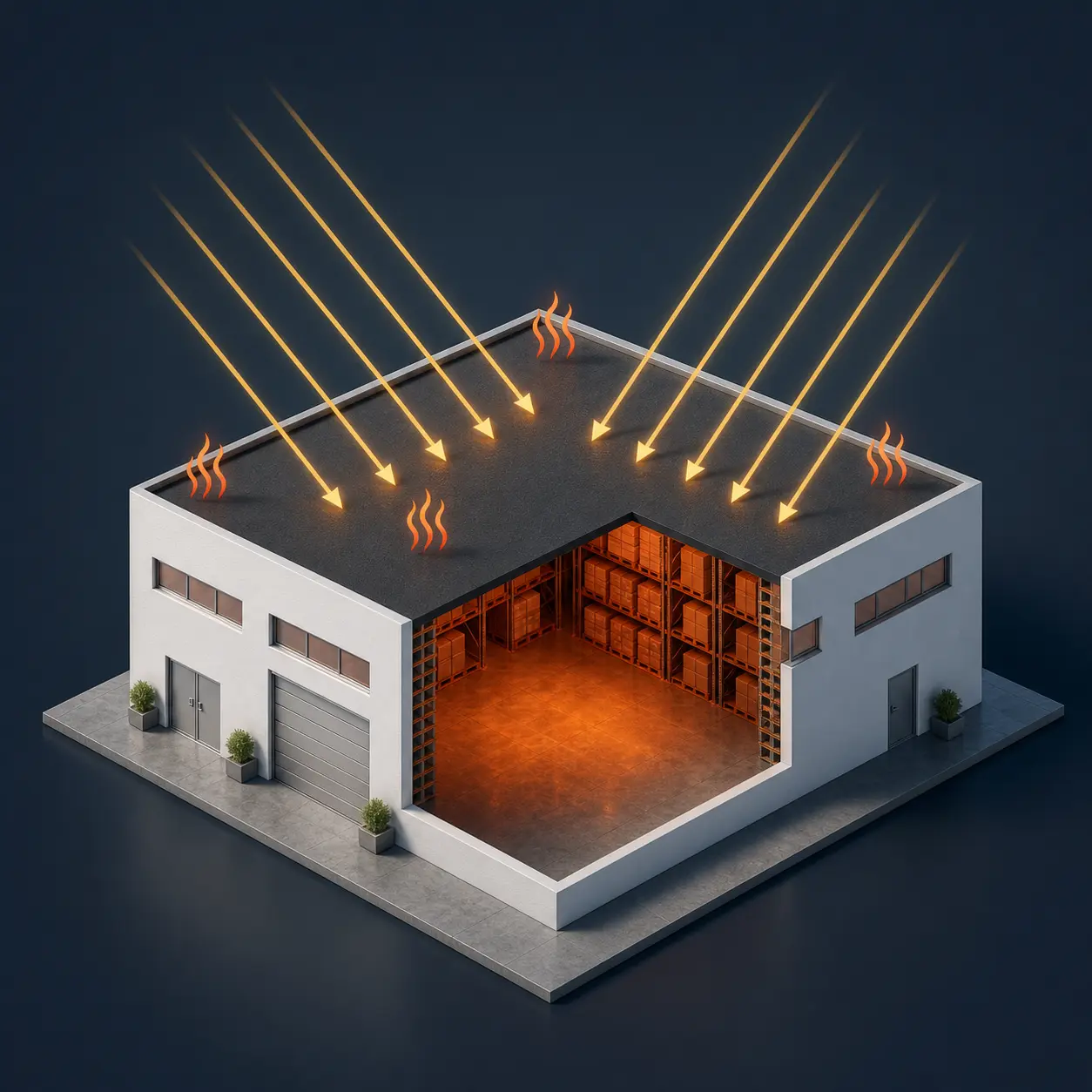 Absorption
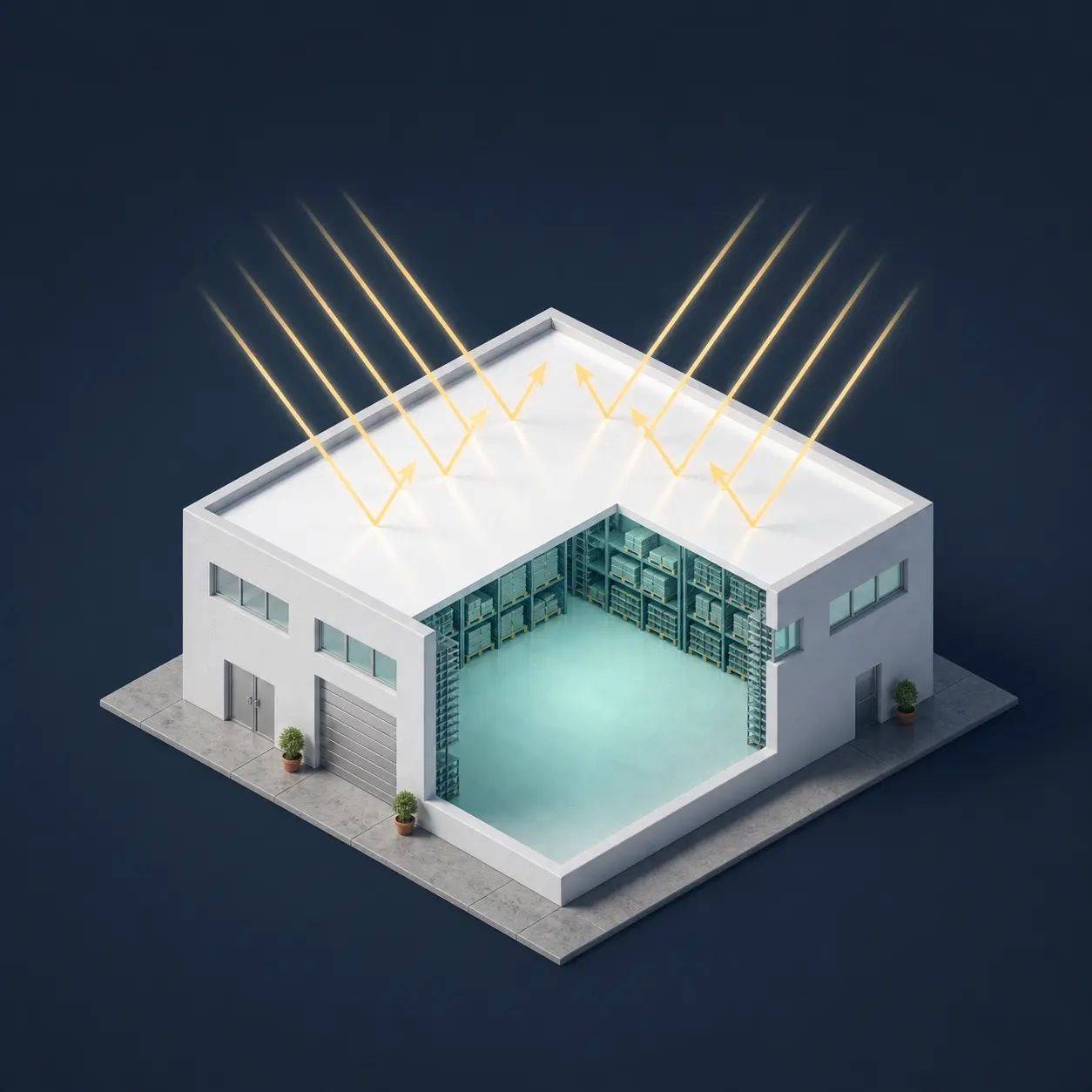 Réflexion
One key question remains: how much does a coating really cost if it has to be redone too soon?
Durability
The price per m² is not enough. On a store, you have to factor in service life, retained reflectivity and the risk of redoing it too soon.
Low cost at application
Prix au m²
~15 €
Tenue
2-5 ans
10 ans
25-30 €
Performance designed to last
Prix au m²
20-22 €
Tenue
8-10 ans
10 ans
20-22 €
Covalba compares technologies, not brands: a well-protected polyurethane resin holds its performance better than an entry-level acrylic coating.
La fiche BAT-EN-112 peut financer une partie du chantier pour les bâtiments commerciaux climatisés par pompe à chaleur. On vérifie les critères avant devis.
Réponse personnalisée sous 48h
Repère rapide
La prime dépend surtout de la zone climatique et de la surface traitée.
À retenir
La prime n'est pas automatique. Covalba confirme la PAC, la surface, la zone et la conformité du revêtement avant de l'intégrer au chiffrage.
Une fois le financement cadré, l'enjeu est d'intervenir sans perturber le magasin.
By treating the roof, the reflective coating improves store comfort from the very first heat peaks.

Dès le premier été
Up to
-8 to -10°C
under your roof
Les gains varient selon la surface, mais le levier reste le même : réduire la chaleur reçue par la toiture.
Un magasin frais retient mieux les clients en période chaude.
Moins de chaleur à compenser pendant les pics d'été.
Les meubles réfrigérés travaillent dans une ambiance plus stable.
Des conditions plus supportables en caisse, accueil et rayons.
Le revêtement limite UV, dilatation et vieillissement du support.
Covalba's coating is used on commercial buildings where heat drives up the bill, hurts foot traffic or threatens product preservation.
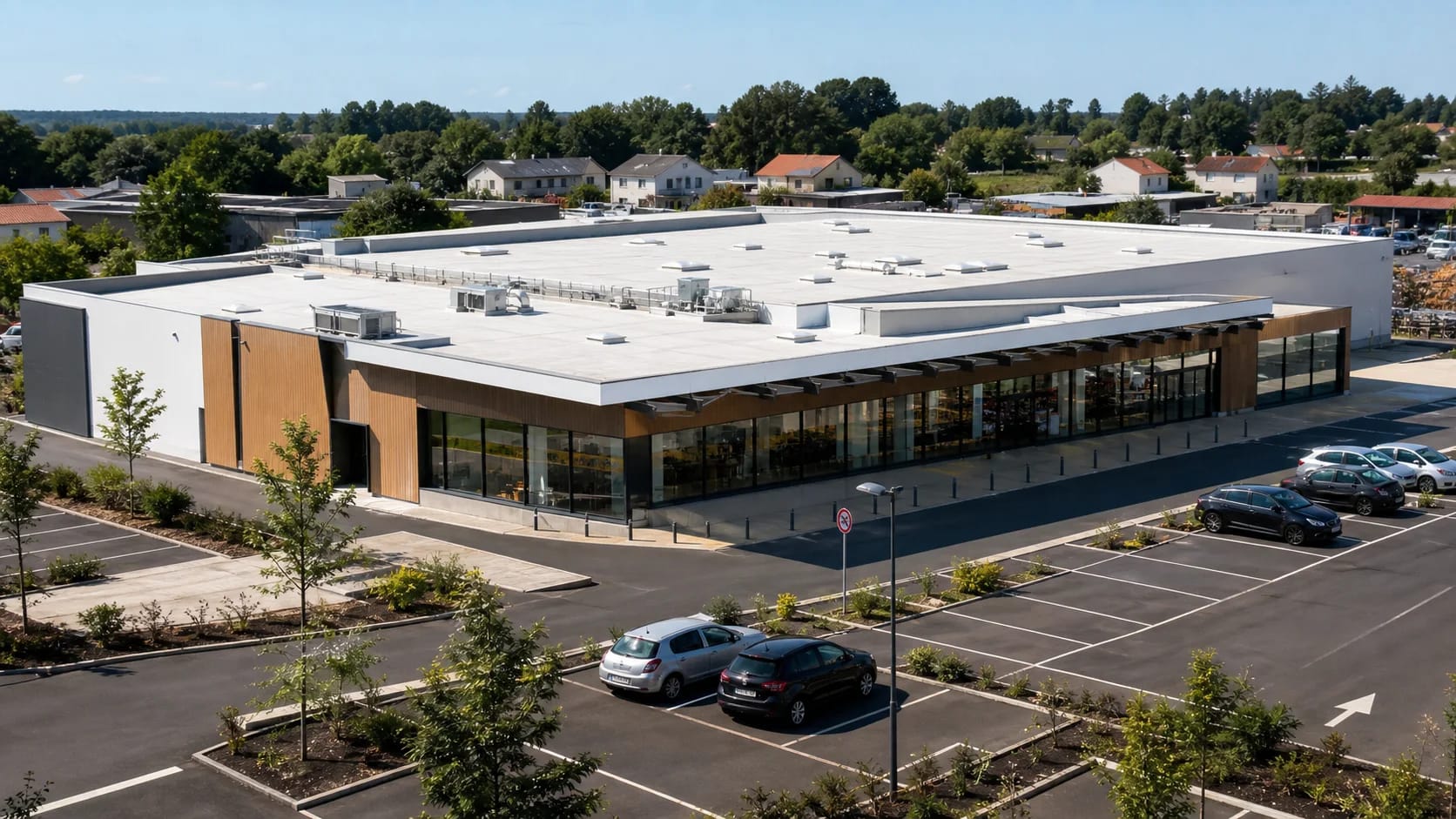
Large roofs, high foot traffic, refrigerated sections.
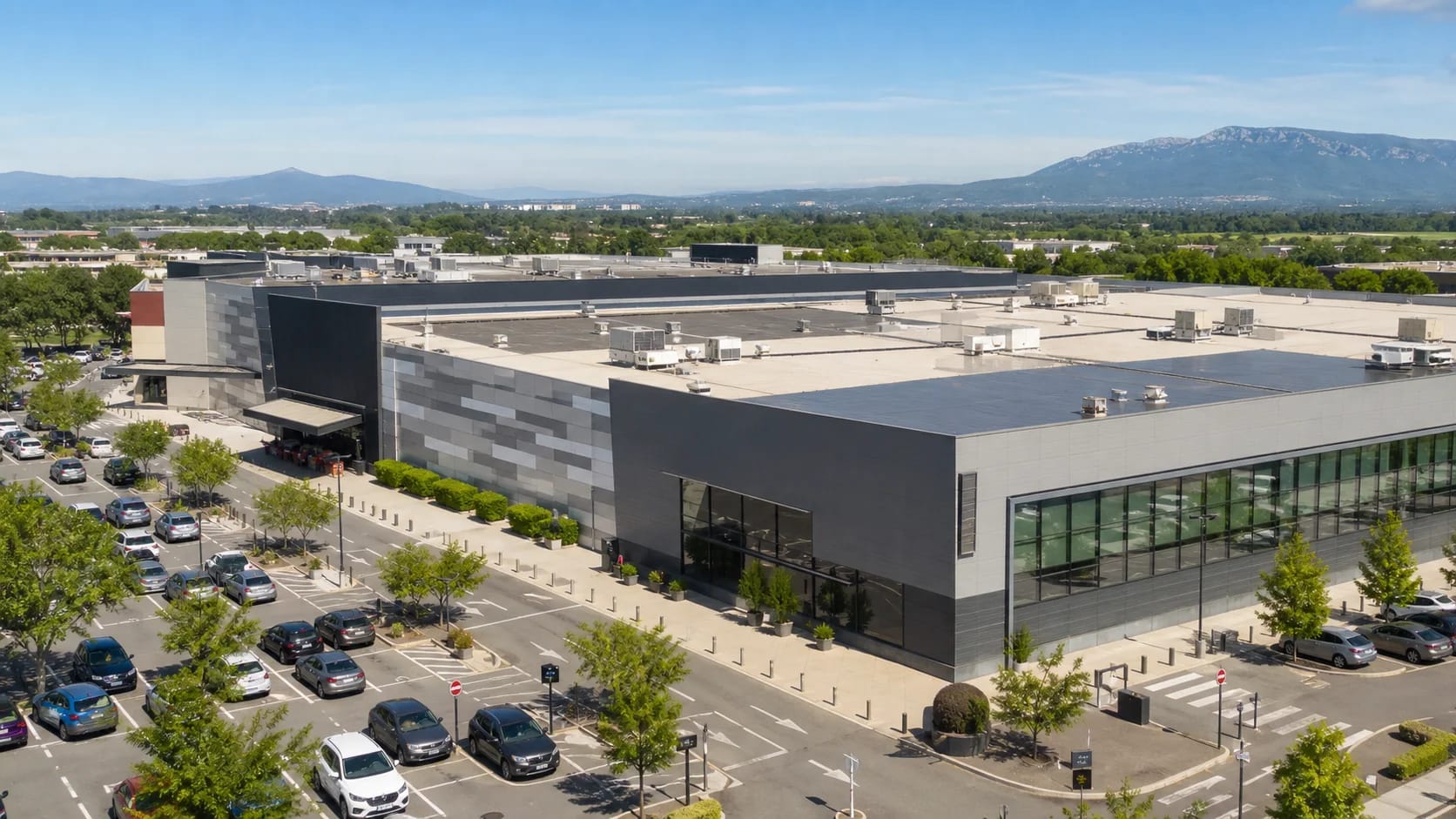
Open volumes where comfort extends the visit.
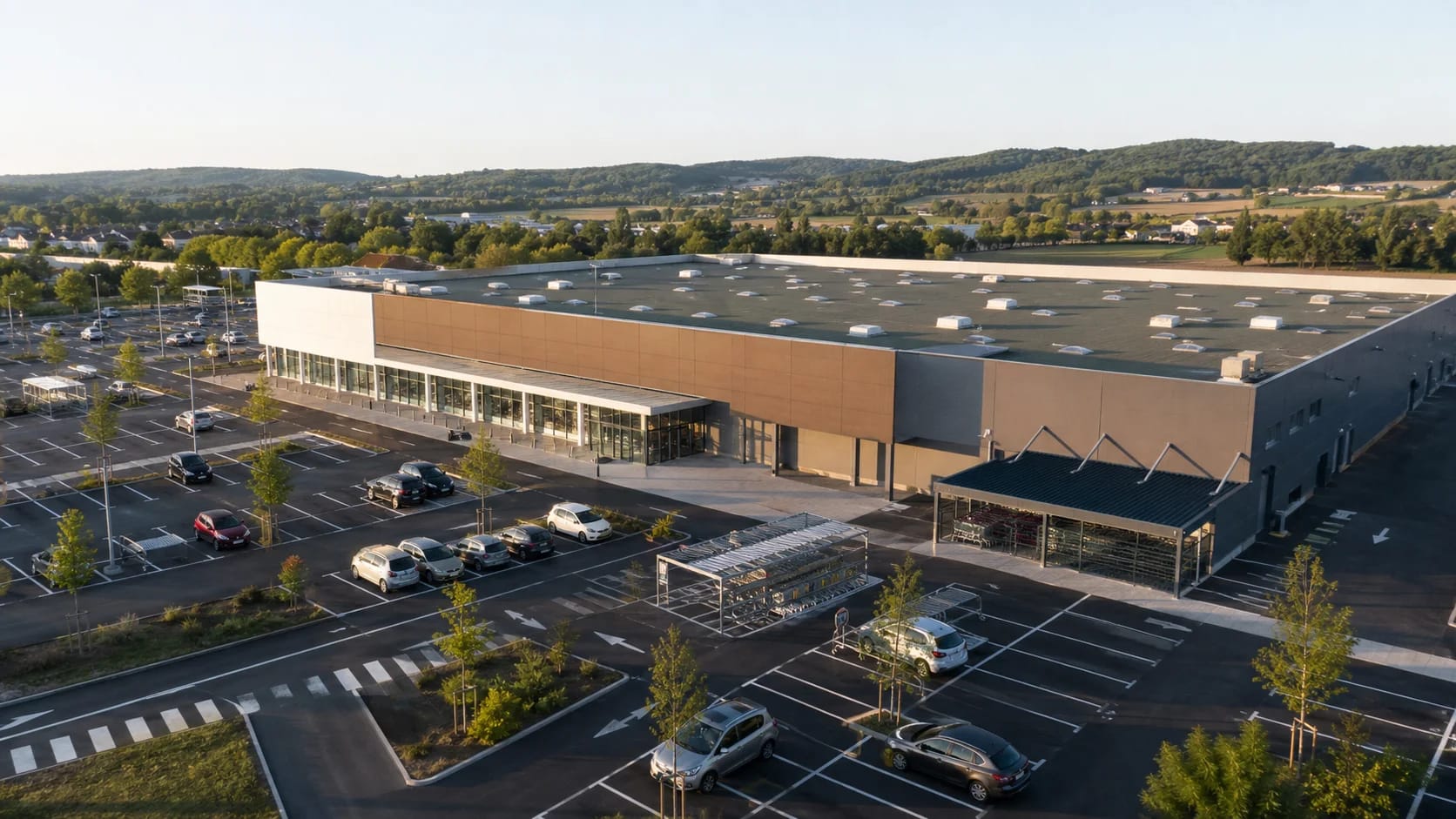
DIY, sports, garden centers or furniture.
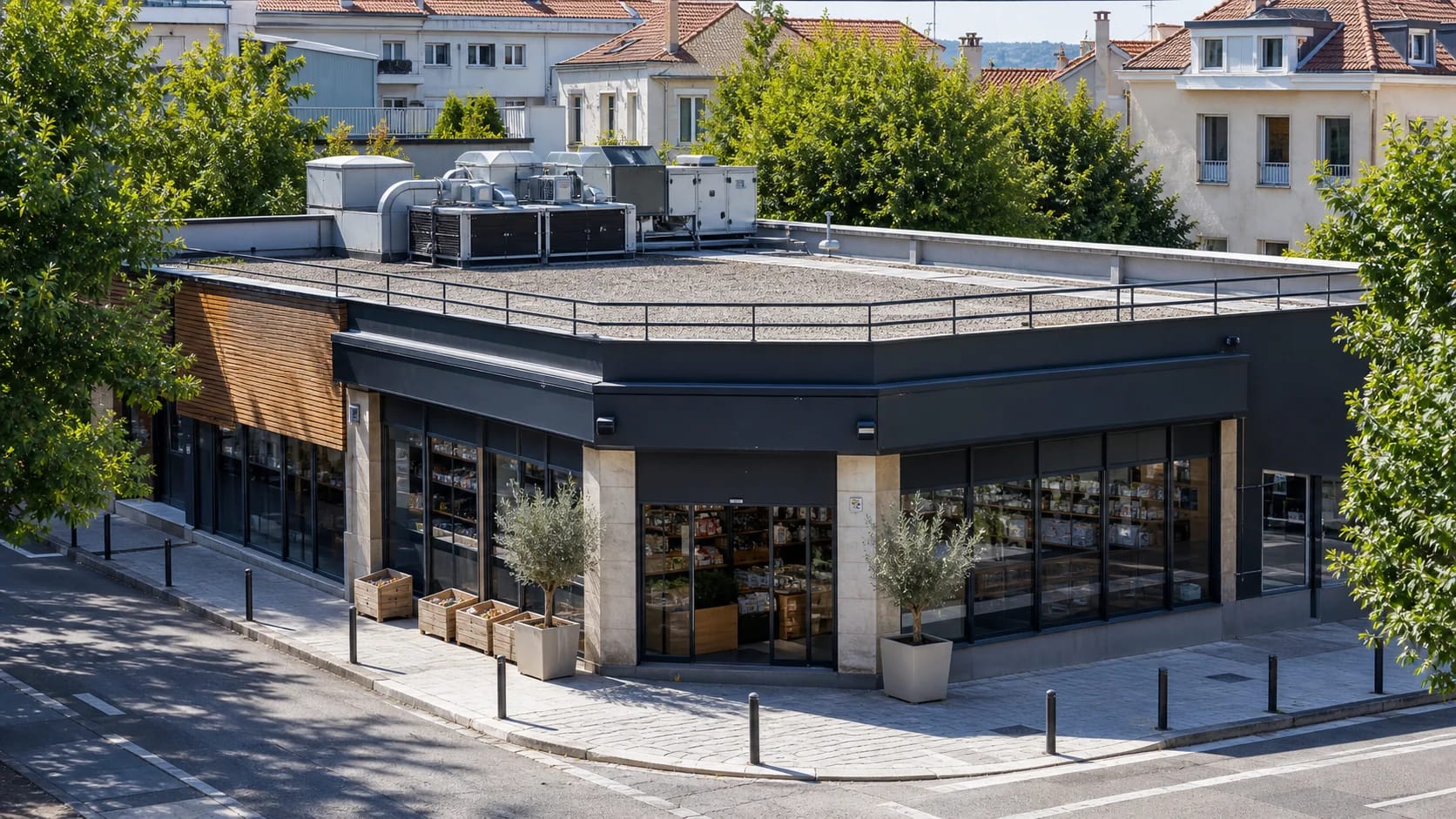
Applied from the outside, with no store closure.
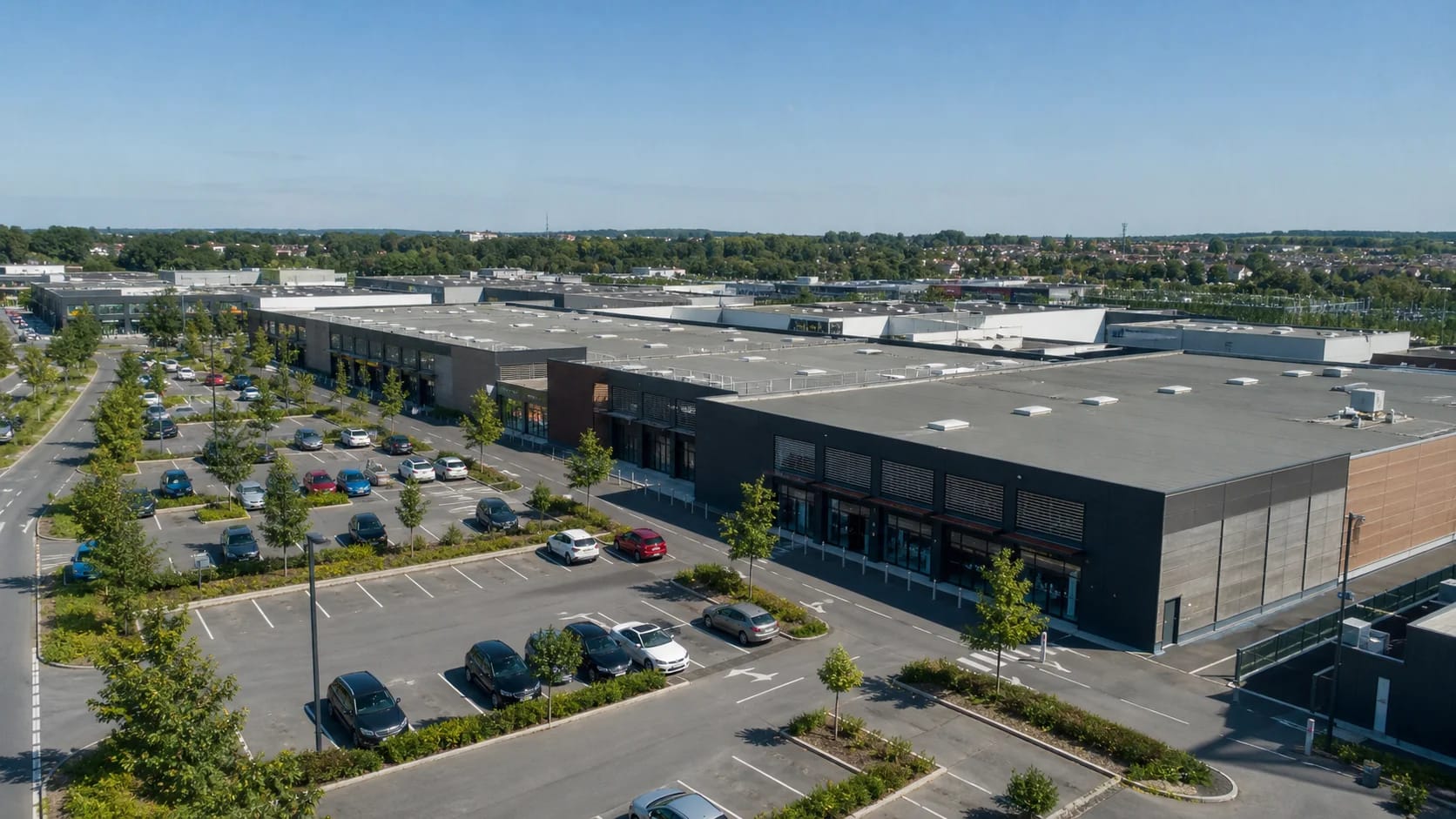
A consistent coating across an entire park.
The next question: how is the coating applied without disrupting operations?
The process
Everything happens from the outside. Your store keeps welcoming its customers, with no heavy equipment on the roof.
We review your roof, access points and the area to be coated to specify the right system for your contractor.
Application is scheduled with your contractor so the store never has to close.
Machines stay at ground level and only the hoses run up to the roof, so there is no disruption inside the store.
The roof transmits less heat and the air conditioning is less strained.
Average duration: 3 to 5 days · No store closure
We assess your roof, recommend the right system and quote it
Field figures and retail buildings already equipped with Covalba coatings.
-7.5°C
on the surface temperature
-38%
on cooling needs
Comfort
for customers and teams from the very first summer
Cas clients
 Distribution
Réhabilitation de 2 500 m² d’ancienne toiture bitumée : environ 5°C gagnés en réserve non climatisée, 3°C gagnés sur la zone magasin et 4,5% d’économie sur le poste froid.
 Distribution
Premier hypermarché Cora équipé d’une toiture cool roof : plus de 12 000 m² de surface de vente concernés par la réduction des apports solaires.
 Distribution
Installation du revêtement CovaSeal sur l'étanchéité bitumineuse.
Voir les références Distribution
Installation du revêtement réflectif CovaSeal 20 sur l'étanchéité bitumineuse.
Voir les références Distribution
Installation de la peinture réflective CovaTherm SRI=119 sur l'étanchéité bitumineuse.
Voir les références Distribution
Installation de la peinture réflective CovaTherm SRI=119 sur l'étanchéité bitumineuse.
Voir les références Distribution
Installation de la peinture réflective CovaTherm SRI=119 sur l'étanchéité bitumineuse.
Voir le cas Distribution
Installation de la peinture réflective CovaTherm SRI=119 sur l'étanchéité bitumineuse.
Voir les références Distribution
Installation de la peinture réflective CovaTherm 20 sur les toitures bac acier.
Voir les références Distribution
Installation de la peinture réflective CovaTherm SRI=119 sur l'étanchéité bitumineuse.
Voir les référencesDistributionInstallation de la peinture réflective CovaTherm SRI=119 sur l'étanchéité bitumineuse.
Voir le cas Distribution
Installation de la peinture réflective CovaTherm SRI=119 sur l'étanchéité bitumineuse.
Voir les références Distribution
Installation de la peinture réflective CovaTherm 118 sur l'étanchéité bitumineuse.
Voir les références Distribution
Installation du revêtement réflectif CovaTherm 20 sur l'étanchéité bitumineuse.
Voir les références Distribution
Installation du revêtement réflectif CovaTherm 20 sur l'étanchéité bitumineuse.
Voir les références Distribution
Installation du revêtement réflectif CovaTherm 20 sur l'étanchéité bitumineuse.
Voir les références Distribution
Installation du revêtement réflectif CovaTherm 20 sur l'étanchéité bitumineuse.
Voir les références Distribution
Installation du revêtement réflectif CovaTherm 20 sur l'étanchéité bitumineuse.
Voir les références Distribution
Installation du revêtement réflectif CovaTherm 20 sur l'étanchéité bitumineuse.
Voir les référencesRéférences distribution Covalba




Avant de lancer votre projet, voici les questions qui reviennent le plus souvent.
The points that come up most often among retail building managers.
Another question? Let's talkRequest your quote, or order a sample to test the coating yourself.
Dossier distribution
In retail, summer heat is not just a matter of comfort: it directly affects foot traffic, the energy bill and product preservation. Here is why a reflective roof changes the game on a sales floor, and what the reference research says on the subject.
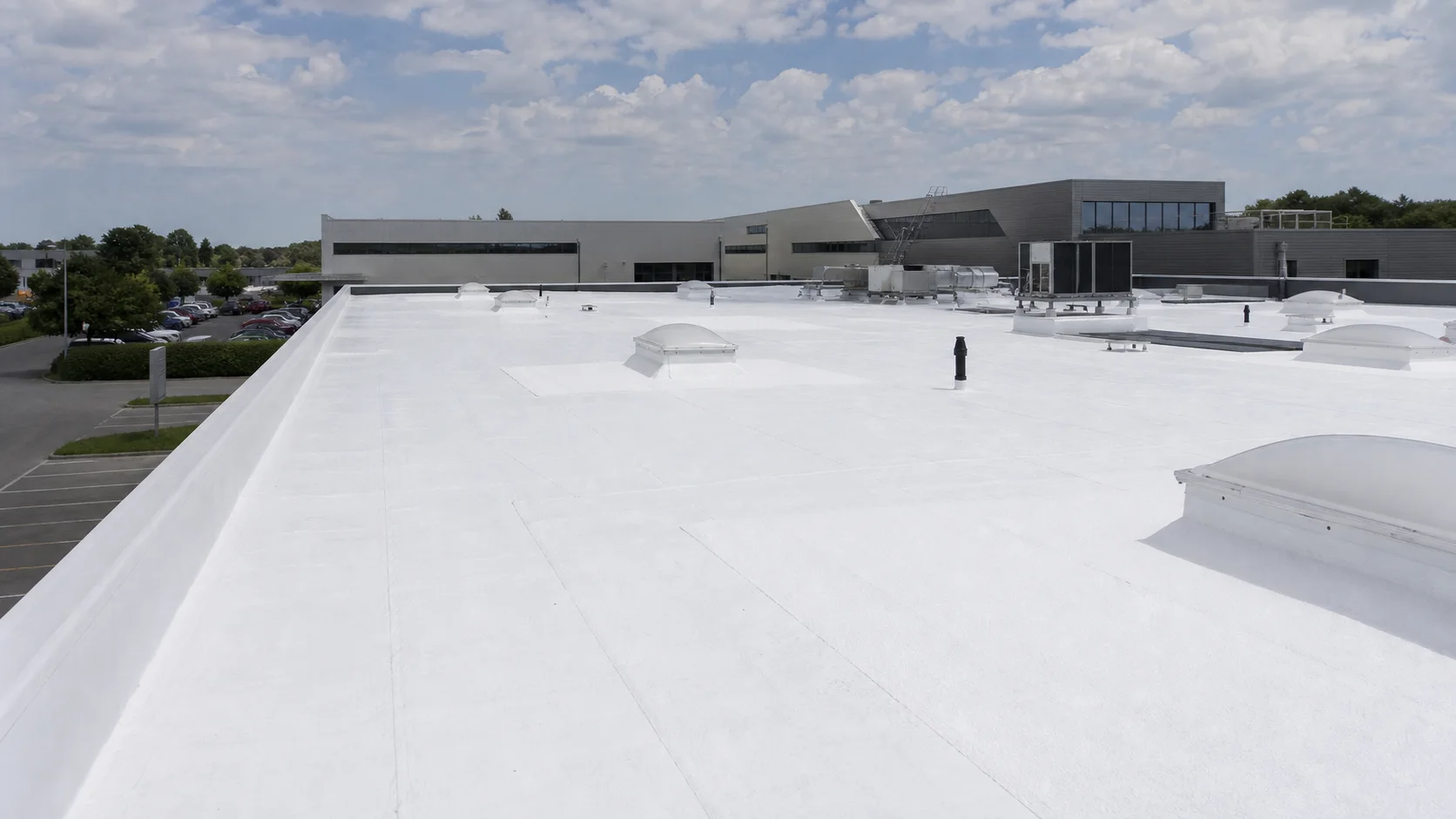
A store or shopping center combines a large flat roof, often steel deck or a dark membrane, above a space open to the public that is meant to be kept at a comfortable temperature. A dark roof soaks up most of the solar radiation and its surface can hit 80°C in midsummer, then drives that heat inside. This is the heat flow through the roof that the reflective roof coating interrupts.
A reflective roof combines high solar reflectance and high emissivity: it sends back a large part of the radiation it receives and sheds the residual heat, instead of storing it. This passive cooling principle is well backed by public laboratories and academic research. These studies estimate that a reflective roof can cut a building’s air conditioning use by a wide margin, with the actual figure depending on insulation, climate zone and usage.
Beyond energy, thermal comfort is a genuine commercial lever. An overheated store sees its foot traffic drop during heat events, and an uncomfortable customer cuts their visit short. A cool environment, on the other hand, encourages people to stay longer in the store. By lowering the temperature under the roof, the reflective coating keeps the store inviting at the very moment when competitors are suffering from the heat.
Unlike a storage warehouse, a retail building is air-conditioned. When the roof heats up, the air conditioning runs in overdrive to hold the set temperature. By cutting the heat input through the roof, the reflective coating reduces the load on cooling and air conditioning equipment. The same mechanism eases the refrigerated sections: refrigerated cabinets and fresh-product areas consume less and preserve food better when the overall environment stays temperate.
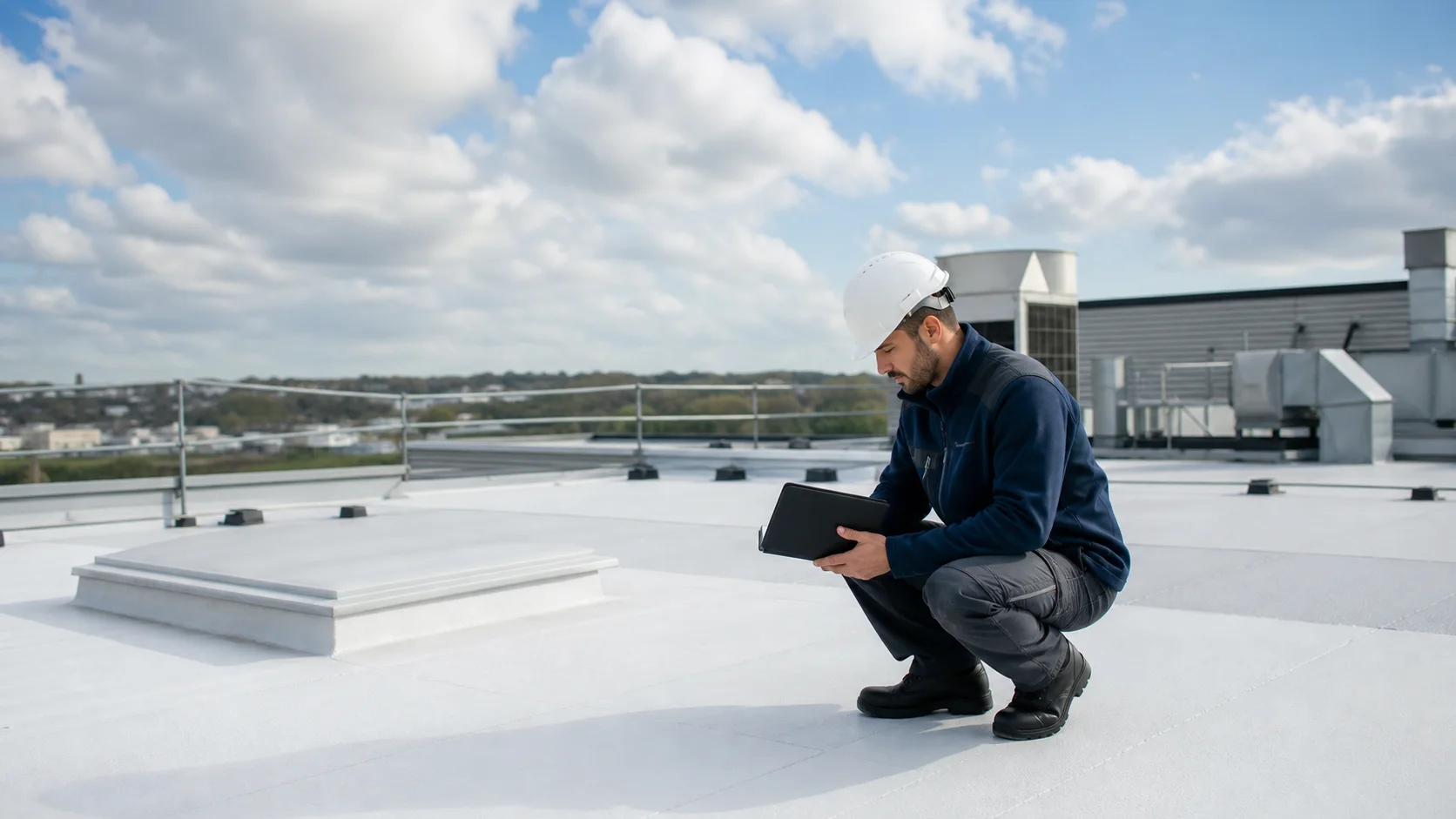
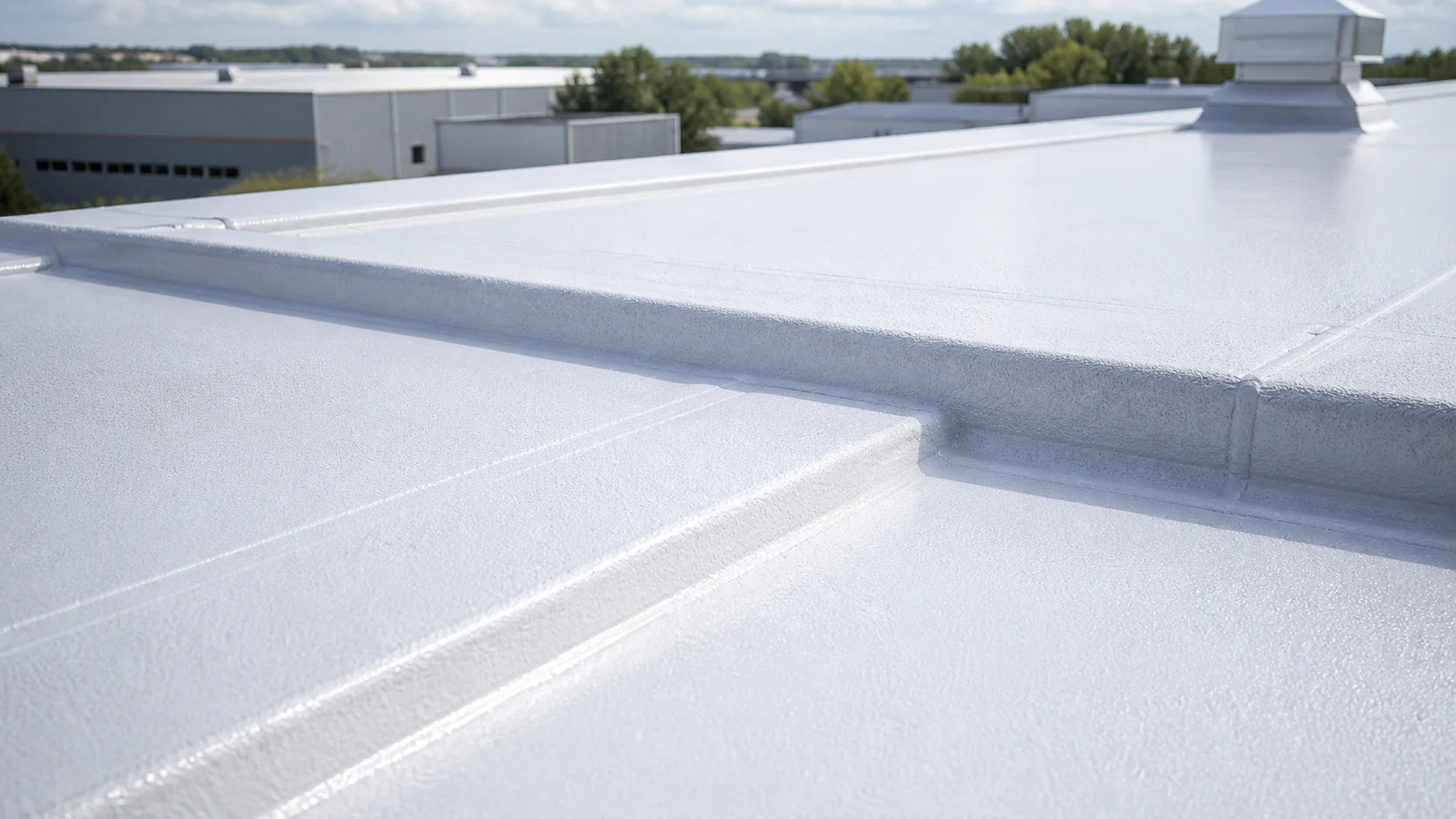
Because a retail building is air-conditioned, a reflective roof coating acts where the cooling need is greatest. For durable results, the product must hold a high solar reflectance index even after aging: this is the condition for the air conditioning savings to be maintained over time. Covalba selects its coatings on this criterion and supports each project from assessment to quotation. Discover the reflective roof coating for retail.
On a commercial roof of several thousand square meters, the durability of the coating is decisive. Low-end acrylic resin-based solutions lose their reflectivity within a few years, which forces a redo far sooner than expected. The coatings offered by Covalba, based on polyurethane and a finish coat, are designed to last 8 to 10 years while retaining their performance. For sensitive substrates, Covalba can also recommend a reflective roof waterproofing or a steel deck reflective coating.
Large retail buildings stand to gain the most from cutting their energy use, and the reflective coating fits this path by acting on air conditioning, with no heavy work or site closure. Most of the opportunity sits in the existing portfolio: stores and buildings with dark or aging roofs that are not yet treated. For a broader approach, also see the pillar page reflective roof coating for commercial buildings or request a reflective roof assessment for retail buildings.
